
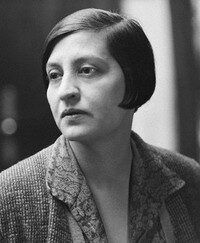
Halide Edib Adıvar
Halide Edib Adıvar was a Turkish social reformer and statesperson. Born June 11, 1884, in Istanbul. Died January 9, 1964, in Istanbul. Positions held include member of the Grand National Assembly of Turkey. Educated at Üsküdar American Academy.
Facts
22 facts · 2 confirmed by two sources · 9 cited · 11 from one source
Where this comes from
Papalocal keeps its own record. It started from these sources; what each one said is kept here as it was copied, so a change on their side never changes this page by itself. Tap one to read its version.
What Wikidata says · copied November 16, 2026 · revision 2567980566
- Described as
- Turkish social reformer and statesperson (1884–1964)
- Other names
- Halide Edip Adıvar, Halide Edib Adivar, Halide Edip
- Born
- June 11, 1884 · 7 references
- Died
- January 9, 1964 · 5 references
- Born in
- Istanbul · 1 reference
- Died in
- Istanbul
- Buried in
- Merkezefendi Cemetery
- Cause of death
- kidney failure
- Citizen of
- Ottoman Empire · 2 references; Turkey · 1 reference
- Occupation
- politician · 1 reference; novelist · 1 reference; writer · 3 references; university teacher · 1 reference; military personnel · 1 reference; journalist; feminist · 1 reference
- Positions held
- member of the Grand National Assembly of Turkey
- Political party
- Democrat Party
- Worked for
- Istanbul University
- Education
- Üsküdar American Academy
- Spouse
- Adnan Adıvar (1917–1955); Salih Zeki (1901–1910) · 1 reference
- Religion
- Islam · 1 reference
- Wikipedias with a page
- 48
Wikidata item Q234289 (wikidata.org/wiki/Q234289), public domain (CC0). Copied November 16, 2026.
What Wikipedia says · copied November 16, 2026 · revision 1367353072
Halide Edip Adıvar (Ottoman Turkish: خالده اديب [hɑːliˈde eˈdib], sometimes spelled Halidé Edib in English; 11 June 1884 – 9 January 1964) was a Turkish novelist, teacher, and a nationalist and feminist intellectual. She was best known for her novels criticizing the low social status of Turkish women and what she observed as a lack of interest of most women in changing their situation. She was a Pan-Turkist and several of her novels advocated for the Turanism movement.
During World War I, Halide Edib Adıvar served as the inspector of schools in Beirut, Damascus, and Aleppo. In this role, she oversaw for six months an orphanage in Antoura (in modern-day Lebanon) where children orphaned in the Armenian genocide were subjected to forced assimilation. In her memoirs, Adıvar indicates that she was responsible for administering the orphanage but did not believe that the practice of forced assimilation was ethical, and she states that her ultimate goal was to save the lives of the Armenian orphans. According to researcher Keith David Watenpaugh, regardless of the motives, what was done at the Antoura orphanage constitutes genocide, based on the 1948 Convention on the Prevention and Punishment of Genocide.
- Born, in its opening lines
- June 11, 1884
- Died, in its opening lines
- January 9, 1964
From the Wikipedia article “Halide Edib Adıvar” (en.wikipedia.org/wiki/Halide_Edib_Adıvar), by its contributors, under CC BY-SA 4.0 (creativecommons.org/licenses/by-sa/4.0/). Copied November 16, 2026; not changed.
Confirmed Two sources agree. Cited One source, and it names where it got it. One source One source, without a reference of its own. Sources disagree The sources disagree. We show the best-supported value and keep theirs below.
