
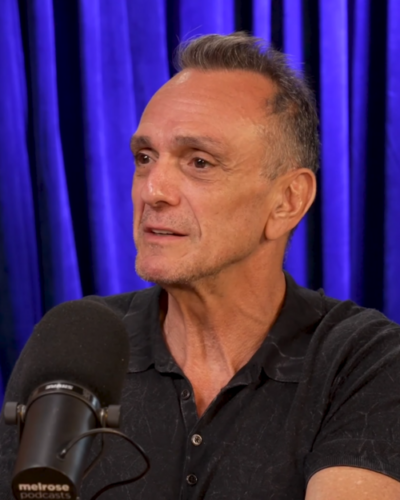
Hank Azaria
Hank Azaria is an American actor. Born April 25, 1964, in Queens. Known for The Simpsons and The Birdcage. Educated at Tufts University and American Academy of Dramatic Arts. Awards include Annie Award, Theatre World Award and Primetime Emmy Award for Outstanding Supporting Actor in a Miniseries or a Movie.
Facts
25 facts · 1 confirmed by two sources · 5 cited · 19 from one source
Where this comes from
Papalocal keeps its own record. It started from these sources; what each one said is kept here as it was copied, so a change on their side never changes this page by itself. Tap one to read its version.
What Wikidata says · copied November 13, 2026 · revision 2541576642
- Described as
- American actor
- Other names
- Henry Albert Azaria, Henry Albert "Hank" Azaria
- Born
- April 25, 1964 · 2 references
- Born in
- Queens
- Name at birth
- Henry Albert Azaria
- Citizen of
- United States
- Occupation
- television actor; film actor; dub actor · 1 reference; stage actor; voice actor; screenwriter · 1 reference; actor · 2 references; television producer · 1 reference
- Education
- Tufts University; American Academy of Dramatic Arts (–1980) · 1 reference; The Kew-Forest School · 1 reference
- Known for
- The Simpsons; The Birdcage
- Awards
- Annie Award; Theatre World Award (2005) · 1 reference; Primetime Emmy Award for Outstanding Supporting Actor in a Miniseries or a Movie (2000); Primetime Emmy Award for Outstanding Guest Actor in a Drama Series (2016); Primetime Emmy Award for Outstanding Character Voice-Over Performance (2015)
- Spouse
- Helen Hunt (1999–2000); Katie Wright
- Lived in
- New York City
- Wikipedias with a page
- 54
Wikidata item Q202056 (wikidata.org/wiki/Q202056), public domain (CC0). Copied November 13, 2026.
What Wikipedia says · copied November 13, 2026 · revision 1384063296
Henry Albert Azaria ( ə-ZAIR-ee-ə; born April 25, 1964) is an American actor and producer. He is known for voicing many characters in the animated sitcom The Simpsons since 1989, including Moe Szyslak, Chief Wiggum, Superintendent Chalmers, Comic Book Guy, Snake, Professor Frink, Kirk Van Houten, Duffman, Apu Nahasapeemapetilon, Lou, and Carl Carlson, among others. Azaria joined the show with little voice acting experience, but became a regular in its second season. For his work on the show, he has won four Primetime Emmy Awards.
Alongside his continued voice acting on The Simpsons, Azaria became more widely known through his live-action supporting appearances in films such as Quiz Show (1994), Heat (1995), The Birdcage (1996) (for which he won a Screen Actors Guild Award) and Godzilla (1998). He has also appeared in numerous films including Mystery Men (1999), America's Sweethearts (2001), Shattered Glass (2003), Along Came Polly (2004), Run Fatboy Run (2007), Night at the Museum: Battle of the Smithsonian (2009) and The Smurfs (2011) and The Smurfs 2 (2013). Further voice roles include Anastasia (1997), for which he won an Annie Award.
Azaria's live-action television work includes recurring roles on the sitcoms Mad About You and Friends, as well as dramatic roles in the TV films Tuesdays with Morrie (1999) as writer Mitch Albom and Uprising (2001) as Jewish resistance leader Mordechai Anielewicz. For the former, Azaria received the Primetime Emmy Award for Outstanding Supporting Actor in a Limited Series or Movie. He starred in the title roles in the Showtime drama series Huff (2004–2006) and the IFC sitcom Brockmire (2017–2020). His recurring role on the drama Ray Donovan earned him a sixth Primetime Emmy Award in 2016.
Azaria made his Broadway debut as Lancelot in Spamalot, for which he was nominated for the Tony Award for Best Actor in a Musical. He returned to Broadway in 2007, playing David Sarnoff in The Farnsworth Invention.
- Born, in its opening lines
- April 25, 1964
From the Wikipedia article “Hank Azaria” (en.wikipedia.org/wiki/Hank_Azaria), by its contributors, under CC BY-SA 4.0 (creativecommons.org/licenses/by-sa/4.0/). Copied November 13, 2026; not changed.
Confirmed Two sources agree. Cited One source, and it names where it got it. One source One source, without a reference of its own. Sources disagree The sources disagree. We show the best-supported value and keep theirs below.
