
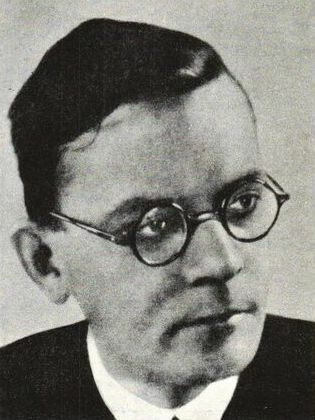
Hans Fallada
Hans Fallada was a German writer. Born July 21, 1893, in Greifswald. Died February 5, 1947, in Berlin.
Facts
17 facts · 2 confirmed by two sources · 8 cited · 7 from one source
Where this comes from
Papalocal keeps its own record. It started from these sources; what each one said is kept here as it was copied, so a change on their side never changes this page by itself. Tap one to read its version.
What Wikidata says · copied November 16, 2026 · revision 2569063130
- Described as
- German writer (1893–1947)
- Other names
- Rudolf Wilhelm Friedrich Ditzen
- Born
- July 21, 1893 · 16 references
- Died
- February 5, 1947 · 16 references
- Born in
- Greifswald · 2 references
- Died in
- Berlin · 3 references
- Buried in
- Pankow III cemetery
- Cause of death
- myocardial infarction
- Citizen of
- Germany · 1 reference
- Occupation
- writer · 2 references; novelist; children's writer; journalist · 1 reference; autobiographer · 1 reference; literary editor · 1 reference; accountant · 1 reference; translator · 1 reference
- Children
- Ulrich Ditzen
- Website
- https://www.fallada.de/
- Wikipedias with a page
- 50
Wikidata item Q76539 (wikidata.org/wiki/Q76539), public domain (CC0). Copied November 16, 2026.
What Wikipedia says · copied November 16, 2026 · revision 1379909931
Hans Fallada (German: [hans ˈfa.la.da] ; born Rudolf Wilhelm Friedrich Ditzen; 21 July 1893 – 5 February 1947) was a German writer of the first half of the 20th century. Some of his better known novels include Little Man, What Now? (1932) and Every Man Dies Alone (1947). His works belong predominantly to the New Objectivity literary style, a style associated with an emotionless reportage approach, with precision of detail, and a veneration for 'the fact'. Fallada's pseudonym derives from a combination of characters found in Grimms' Fairy Tales: The titular protagonist of Hans in Luck (KHM 83), and Fallada the magical talking horse in The Goose Girl. Fallada was nominated for the Nobel Prize in Literature in 1936, and 1939.
- Born, in its opening lines
- July 21, 1893
- Died, in its opening lines
- February 5, 1947
From the Wikipedia article “Hans Fallada” (en.wikipedia.org/wiki/Hans_Fallada), by its contributors, under CC BY-SA 4.0 (creativecommons.org/licenses/by-sa/4.0/). Copied November 16, 2026; not changed.
Confirmed Two sources agree. Cited One source, and it names where it got it. One source One source, without a reference of its own. Sources disagree The sources disagree. We show the best-supported value and keep theirs below.
