
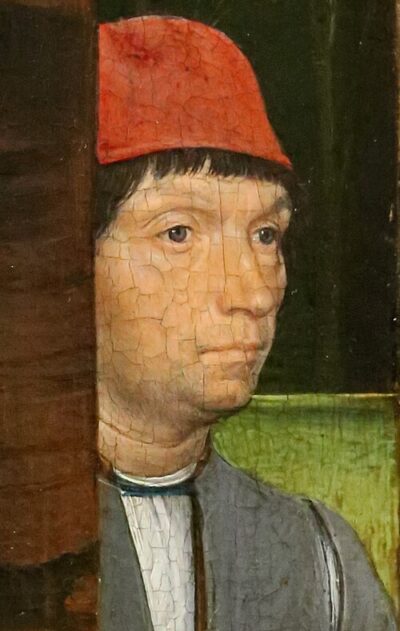
Hans Memling
Hans Memling was a German/Flemish painter (c. 1430–1494). Born 1430s, in Seligenstadt. Died August 11, 1494, in Bruges. Known for St John Altarpiece, Advent and Triumph of Christ and The Last Judgment.
Facts
21 facts · 1 confirmed by two sources · 6 cited · 12 from one source · 2 where the sources disagree
What’s different
- Born: we show 1430s (Sources disagree). Wikipedia says c. 1430
- Born in: we show Seligenstadt (Sources disagree). Wikidata also lists Mainz
Where this comes from
Papalocal keeps its own record. It started from these sources; what each one said is kept here as it was copied, so a change on their side never changes this page by itself. Tap one to read its version.
What Wikidata says · copied November 16, 2026 · revision 2567826306
- Described as
- German/Flemish painter (c. 1430–1494)
- Other names
- Hans Hemelinck, Hans van Brugge, Jan van Memmelynghe, Memling, Hans Hemling, Hans Memmelinck, Hans Mamline, Khans Memling, John of Bruges, Jan Memlinc, Hans Hemmeling, Hans Memlinc
- Born
- 1430s · 2 references
- Died
- August 11, 1494 · 6 references
- Born in
- Seligenstadt · 1 reference; Mainz · 1 reference
- Died in
- Bruges · 1 reference
- Buried in
- Sint-Gilliskerk Brugge
- Citizen of
- Habsburg Netherlands; Germany · 1 reference
- Occupation
- painter · 4 references; artist · 3 references; visual artist · 1 reference; draftsperson · 1 reference
- Known for
- St John Altarpiece; Advent and Triumph of Christ; The Last Judgment; Greverade Triptych; Diptych of Maarten van Nieuwenhove; Bembo diptych; Tommaso di Folco Portinari (1428–1501); Maria Portinari (Maria Maddalena Baroncelli, born 1456); Master of the Prado Adoration of the Magi; Portrait of a Man; Portrait of an old man
- Wikipedias with a page
- 52
Wikidata item Q106851 (wikidata.org/wiki/Q106851), public domain (CC0). Copied November 16, 2026.
What Wikipedia says · copied November 16, 2026 · revision 1384704400
Hans Memling (also spelled Memlinc; c. 1430 – 11 August 1494) was a German-Flemish painter who worked in the tradition of Early Netherlandish painting. Born in the Middle Rhine region, he probably spent his childhood in Mainz. During his apprenticeship as a painter he moved to the Netherlands and spent time in the Brussels workshop of Rogier van der Weyden. In 1465 he was made a citizen of Bruges, where he became one of the leading artists and the master of a large workshop. A tax document from 1480 lists him among the wealthiest citizens. Memling's religious works often incorporated donor portraits of the clergymen, aristocrats, and burghers (bankers, merchants, and politicians) who were his patrons. These portraits built upon the styles which Memling learned in his youth.
He married Anna de Valkenaere sometime between 1470 and 1480, and they had three children. Memling's art was rediscovered in the 19th century, attaining wide popularity.
- Born, in its opening lines
- c. 1430
- Died, in its opening lines
- August 11, 1494
From the Wikipedia article “Hans Memling” (en.wikipedia.org/wiki/Hans_Memling), by its contributors, under CC BY-SA 4.0 (creativecommons.org/licenses/by-sa/4.0/). Copied November 16, 2026; not changed.
Confirmed Two sources agree. Cited One source, and it names where it got it. One source One source, without a reference of its own. Sources disagree The sources disagree. We show the best-supported value and keep theirs below.
