
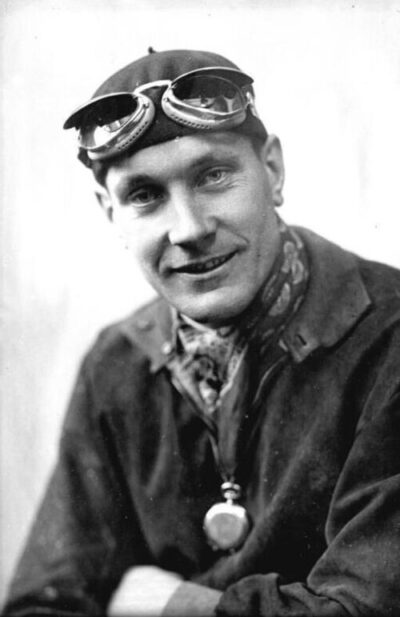
Hans Stuck
Hans Stuck was a German racecar driver. Born December 27, 1900, in Warsaw. Died February 9, 1978, in Grainau.
Facts
11 facts · 2 confirmed by two sources · 3 cited · 6 from one source
What’s different
- Died: we show February 9, 1978 (Confirmed). Wikidata also lists February 8, 1978
Where this comes from
Papalocal keeps its own record. It started from these sources; what each one said is kept here as it was copied, so a change on their side never changes this page by itself. Tap one to read its version.
What Wikidata says · copied November 18, 2026 · revision 2568884104
- Described as
- German racecar driver (1900–1978)
- Born
- December 27, 1900 · 4 references
- Died
- February 9, 1978 · 2 references; February 8, 1978 · 1 reference
- Born in
- Warsaw · 1 reference
- Died in
- Grainau
- Citizen of
- Germany; Austria
- Occupation
- Formula One driver; racing driver · 1 reference
- Sport
- auto racing
- Spouse
- Paula von Reznicek · 1 reference
- Children
- Hans-Joachim Stuck
- Wikipedias with a page
- 21
Wikidata item Q61541 (wikidata.org/wiki/Q61541), public domain (CC0). Copied November 18, 2026.
What Wikipedia says · copied November 18, 2026 · revision 1385778555
Hans Erich Karl Josef Stuck (German pronunciation: [hans ʃtʊk]; sometimes called Hans Stuck von Villiez; 27 December 1900 – 9 February 1978) was a German motor racing driver. Both his son Hans-Joachim Stuck (born 1951) and his grandsons Johannes and Ferdinand Stuck became race drivers.
Despite many successes in Grand Prix motor racing for Auto Union in the early 1930s, during the era of the famous "Silver Arrows", he is now mostly known for his domination of hillclimbing, which earned him the nickname "Bergkönig" or "King of the Mountains".
- Born, in its opening lines
- December 27, 1900
- Died, in its opening lines
- February 9, 1978
From the Wikipedia article “Hans Stuck” (en.wikipedia.org/wiki/Hans_Stuck), by its contributors, under CC BY-SA 4.0 (creativecommons.org/licenses/by-sa/4.0/). Copied November 18, 2026; not changed.
Confirmed Two sources agree. Cited One source, and it names where it got it. One source One source, without a reference of its own. Sources disagree The sources disagree. We show the best-supported value and keep theirs below.
