
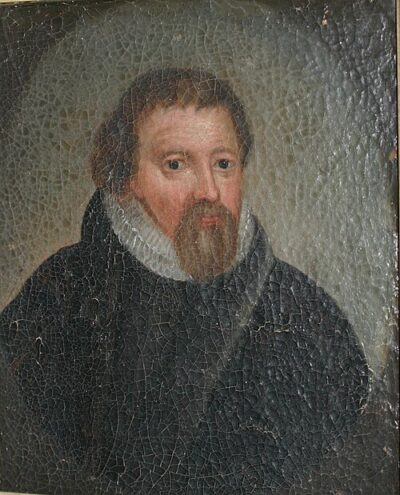
Hans Tausen was a Danish religious reformer. Born 1494, in Birkende. Died November 11, 1561, in Ribe. Positions held include bishop (1537–1541). Educated at University of Copenhagen.
Facts
22 facts · 2 confirmed by two sources · 6 cited · 14 from one source
Where this comes from
Papalocal keeps its own record. It started from these sources; what each one said is kept here as it was copied, so a change on their side never changes this page by itself. Tap one to read its version.
What Wikidata says · copied November 18, 2026 · revision 2567363116
- Described as
- Danish religious reformer
- Other names
- Bishop in Ribe Hans Tausen
- Born
- 1494 · 11 references
- Died
- November 11, 1561 · 3 references
- Born in
- Birkende
- Died in
- Ribe · 1 reference
- Buried in
- Ribe Cathedral
- Citizen of
- Kingdom of Denmark
- Occupation
- linguist; translator; theologian; Bible translator; composer · 1 reference; Lutheran pastor; bishop · 1 reference; Protestant reformer · 1 reference
- Positions held
- bishop (1537–1541)
- Worked for
- University of Copenhagen
- Education
- University of Copenhagen
- Field
- Protestant theology · 1 reference; translations from Hebrew · 1 reference
- Children
- Jørgen Hansen Tausen; Dorothea Laugesen · 1 reference
- Religion
- Lutheranism
- Wikipedias with a page
- 24
Wikidata item Q347726 (wikidata.org/wiki/Q347726), public domain (CC0). Copied November 18, 2026.
What Wikipedia says · copied November 18, 2026 · revision 1378206182
Hans Tausen (Tavsen) (1494 – 11 November 1561) nicknamed the "Danish Luther" was the leading Lutheran theologian of the Danish Reformation. He served as Bishop of Ribe and published the first translation of the Pentateuch into Danish in 1535.
- Born, in its opening lines
- 1494
- Died, in its opening lines
- November 11, 1561
From the Wikipedia article “Hans Tausen” (en.wikipedia.org/wiki/Hans_Tausen), by its contributors, under CC BY-SA 4.0 (creativecommons.org/licenses/by-sa/4.0/). Copied November 18, 2026; not changed.
Confirmed Two sources agree. Cited One source, and it names where it got it. One source One source, without a reference of its own. Sources disagree The sources disagree. We show the best-supported value and keep theirs below.
