
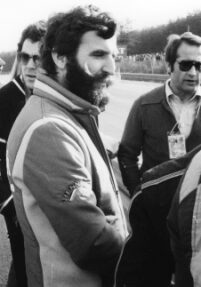
Harald Ertl was a racecar driver. Born August 31, 1948, in Zell am See. Died April 7, 1982, in Giessen.
Facts
9 facts · 2 confirmed by two sources · 0 cited · 7 from one source
Where this comes from
Papalocal keeps its own record. It started from these sources; what each one said is kept here as it was copied, so a change on their side never changes this page by itself. Tap one to read its version.
What Wikidata says · copied November 18, 2026 · revision 2568952898
- Described as
- racecar driver (1948–1982)
- Born
- August 31, 1948 · 1 reference
- Died
- April 7, 1982 · 1 reference
- Born in
- Zell am See
- Died in
- Giessen
- Cause of death
- aircraft crash
- Citizen of
- Austria
- Occupation
- Formula One driver; journalist
- Sport
- auto racing
- Wikipedias with a page
- 21
Wikidata item Q78548 (wikidata.org/wiki/Q78548), public domain (CC0). Copied November 18, 2026.
What Wikipedia says · copied November 18, 2026 · revision 1385779477
Harald Ertl (31 August 1948 – 7 April 1982) was an Austrian racing driver and motorsport journalist. He was born in Zell am See and attended the same school as Grand Prix drivers Jochen Rindt, Helmut Marko and Niki Lauda.
Ertl sported an 'Imperial'-style moustache and full beard. He worked his way through the German Formula Vee and Super Vee, and then on to Formula Three, before a successful switch to Touring Cars. During this period, he gained sufficient sponsorship to enter Formula One, where he drove with various outfits between 1975 and 1980. Ertl was one of the four drivers who helped to get Niki Lauda out of his burning Ferrari in the 1976 German Grand Prix.
Ertl was killed in an aeroplane crash in 1982, when the small plane he was travelling in suffered from engine failure.
- Born, in its opening lines
- August 31, 1948
- Died, in its opening lines
- April 7, 1982
From the Wikipedia article “Harald Ertl” (en.wikipedia.org/wiki/Harald_Ertl), by its contributors, under CC BY-SA 4.0 (creativecommons.org/licenses/by-sa/4.0/). Copied November 18, 2026; not changed.
Confirmed Two sources agree. Cited One source, and it names where it got it. One source One source, without a reference of its own. Sources disagree The sources disagree. We show the best-supported value and keep theirs below.
