
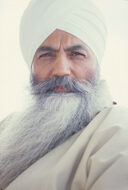
Harbhajan Singh Yogi
Harbhajan Singh Yogi was an Indian-American Sikh Yogi. Born August 26, 1929, in Gujranwala. Died October 6, 2004, in Española.
Facts
10 facts · 2 confirmed by two sources · 0 cited · 8 from one source
Where this comes from
Papalocal keeps its own record. It started from these sources; what each one said is kept here as it was copied, so a change on their side never changes this page by itself. Tap one to read its version.
What Wikidata says · copied November 18, 2026 · revision 2564405936
- Described as
- Indian-American Sikh Yogi (1929-2004)
- Other names
- Harbhajan Singh Khalsa, Yogi Bhajan, Harbhajan Singh Khalsa Yogiji, Yogi Harbhajan
- Born
- August 26, 1929 · 1 reference
- Died
- October 6, 2004 · 3 references
- Born in
- Gujranwala
- Died in
- Española
- Citizen of
- India; Pakistan; British Raj; Dominion of India
- Occupation
- religious person
- Field
- yoga
- Wikipedias with a page
- 21
Wikidata item Q918843 (wikidata.org/wiki/Q918843), public domain (CC0). Copied November 18, 2026.
What Wikipedia says · copied November 18, 2026 · revision 1384437527
Yogi Bhajan (born Harbhajan Singh Puri) (August 26, 1929 – October 6, 2004), also known as Siri Singh Sahib to his followers, was an American entrepreneur, yoga guru, and putative spiritual teacher. He introduced his version of Kundalini yoga to the United States. He was the spiritual director of the 3HO (Healthy, Happy, Holy Organization) foundation (and business ventures), with over 300 centers in 35 countries. He was accused of sexual abuse by several dozen of his female followers; an investigation called the Olive Branch Report found the allegations most likely true.
- Born, in its opening lines
- August 26, 1929
- Died, in its opening lines
- October 6, 2004
From the Wikipedia article “Yogi Bhajan” (en.wikipedia.org/wiki/Yogi_Bhajan), by its contributors, under CC BY-SA 4.0 (creativecommons.org/licenses/by-sa/4.0/). Copied November 18, 2026; not changed.
Confirmed Two sources agree. Cited One source, and it names where it got it. One source One source, without a reference of its own. Sources disagree The sources disagree. We show the best-supported value and keep theirs below.
