
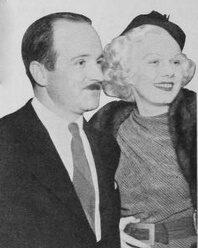
Harold Rosson
Harold Rosson was an American cinematographer. Born April 6, 1895, in New York City. Died September 6, 1988, in Palm Beach. Awards include Academy Honorary Award.
Facts
13 facts · 2 confirmed by two sources · 5 cited · 6 from one source
Where this comes from
Papalocal keeps its own record. It started from these sources; what each one said is kept here as it was copied, so a change on their side never changes this page by itself. Tap one to read its version.
What Wikidata says · copied November 18, 2026 · revision 2566916206
- Described as
- American cinematographer (1895-1988)
- Born
- April 6, 1895 · 4 references
- Died
- September 6, 1988 · 4 references
- Born in
- New York City · 1 reference
- Died in
- Palm Beach · 1 reference
- Buried in
- Hollywood Forever Cemetery
- Citizen of
- United States
- Occupation
- cinematographer · 1 reference; camera operator
- Awards
- Academy Honorary Award
- Field
- film · 1 reference; television · 1 reference
- Spouse
- Jean Harlow (1933–1934)
- Military branch
- United States Army
- Wikipedias with a page
- 15
Wikidata item Q1368602 (wikidata.org/wiki/Q1368602), public domain (CC0). Copied November 18, 2026.
What Wikipedia says · copied November 18, 2026 · revision 1341170053
Harold G. "Hal" Rosson, A.S.C. (April 6, 1895 – September 6, 1988) was an American cinematographer who worked during the early and classical Hollywood cinema, in a career spanning some 52 years, starting from the silent era in 1915. He is best known for his work on the fantasy film The Wizard of Oz (1939) and the musical Singin' in the Rain (1952), as well as his marriage to Jean Harlow.
- Born, in its opening lines
- April 6, 1895
- Died, in its opening lines
- September 6, 1988
From the Wikipedia article “Harold Rosson” (en.wikipedia.org/wiki/Harold_Rosson), by its contributors, under CC BY-SA 4.0 (creativecommons.org/licenses/by-sa/4.0/). Copied November 18, 2026; not changed.
Confirmed Two sources agree. Cited One source, and it names where it got it. One source One source, without a reference of its own. Sources disagree The sources disagree. We show the best-supported value and keep theirs below.
