
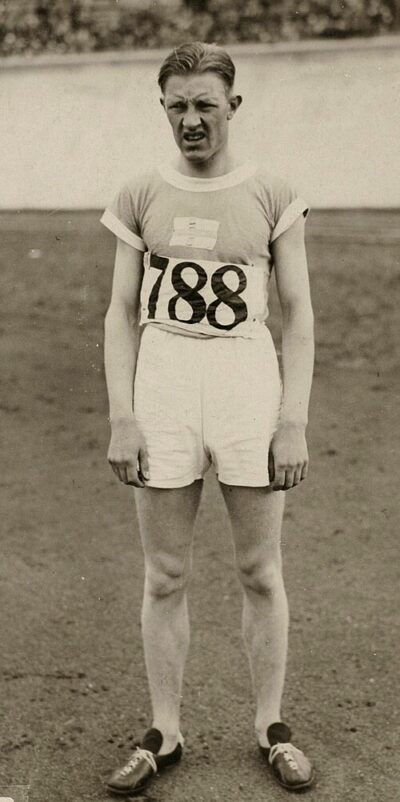
Harri Larva
Harri Larva was a Finnish middle distance runner. Born September 9, 1906, in Turku. Died November 15, 1980, in Turku.
Facts
10 facts · 2 confirmed by two sources · 2 cited · 6 from one source
Where this comes from
Papalocal keeps its own record. It started from these sources; what each one said is kept here as it was copied, so a change on their side never changes this page by itself. Tap one to read its version.
What Wikidata says · copied November 17, 2026 · revision 2568486700
- Described as
- Finnish middle distance runner (1906–1980)
- Other names
- Harry Edvin Lagerström
- Born
- September 9, 1906 · 2 references
- Died
- November 15, 1980
- Born in
- Turku · 1 reference
- Died in
- Turku · 1 reference
- Name at birth
- Harry Edvin Lagerström
- Citizen of
- Finland
- Occupation
- middle-distance runner; athletics competitor
- Sport
- athletics
- Height
- 1.80 m (5 ft 11 in)
- Wikipedias with a page
- 24
Wikidata item Q711999 (wikidata.org/wiki/Q711999), public domain (CC0). Copied November 17, 2026.
What Wikipedia says · copied November 17, 2026 · revision 1364241244
Harry Edvin "Harri" Larva (born Lagerström; 9 September 1906 – 15 November 1980) was a Finnish athlete who won the 1500 m race at the 1928 Summer Olympics. He never excelled in this event nationally and was the Finnish champion in the 800 m in 1928–1930 and 1934. Larva finished 10th in the 1500 m at the 1932 Summer Olympics.
Larva was requested to change his last name in 1928 by Urho Kekkonen, then president of Finnish Athletics Union and later president of Finland, who thought that his birth name Lagerström did not sound Finnish enough.
- Born, in its opening lines
- September 9, 1906
- Died, in its opening lines
- November 15, 1980
From the Wikipedia article “Harri Larva” (en.wikipedia.org/wiki/Harri_Larva), by its contributors, under CC BY-SA 4.0 (creativecommons.org/licenses/by-sa/4.0/). Copied November 17, 2026; not changed.
Confirmed Two sources agree. Cited One source, and it names where it got it. One source One source, without a reference of its own. Sources disagree The sources disagree. We show the best-supported value and keep theirs below.
