
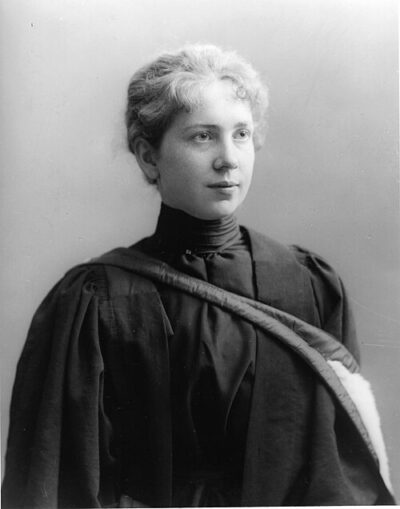
Harriet Brooks
Harriet Brooks was a Canadian nuclear physicist. Born July 2, 1876, in Exeter. Died April 17, 1933, in Montreal. Educated at McGill University and Bryn Mawr College. Awards include Person of National Historic Significance.
Facts
15 facts · 2 confirmed by two sources · 11 cited · 2 from one source
Where this comes from
Papalocal keeps its own record. It started from these sources; what each one said is kept here as it was copied, so a change on their side never changes this page by itself. Tap one to read its version.
What Wikidata says · copied November 16, 2026 · revision 2560316579
- Described as
- Canadian nuclear physicist (1876–1933)
- Other names
- Harriet Brooks Pitcher, H. Brooks
- Born
- July 2, 1876 · 2 references
- Died
- April 17, 1933 · 2 references
- Born in
- Exeter · 1 reference
- Died in
- Montreal · 1 reference
- Citizen of
- Canada
- Occupation
- physicist · 1 reference; nuclear physicist · 1 reference
- Worked for
- Barnard College · 1 reference; Curie Institute · 1 reference
- Education
- McGill University · 1 reference; Bryn Mawr College · 1 reference; Newnham College · 1 reference
- Awards
- Person of National Historic Significance · 1 reference
- Field
- nuclear physics · 2 references
- Lived in
- Canada · 1 reference
- Wikipedias with a page
- 23
Wikidata item Q469259 (wikidata.org/wiki/Q469259), public domain (CC0). Copied November 16, 2026.
What Wikipedia says · copied November 16, 2026 · revision 1380059245
Harriet Brooks (July 2, 1876 – April 17, 1933) was a Canadian nuclear physicist. She is most famous for her research in radioactivity. She discovered atomic recoil, and transmutation of elements in radioactive decay. Ernest Rutherford, who guided her graduate work, regarded her as comparable to Marie Curie in the calibre of her aptitude. She was among the first to discover radon and to try to determine its atomic mass.
- Born, in its opening lines
- July 2, 1876
- Died, in its opening lines
- April 17, 1933
From the Wikipedia article “Harriet Brooks” (en.wikipedia.org/wiki/Harriet_Brooks), by its contributors, under CC BY-SA 4.0 (creativecommons.org/licenses/by-sa/4.0/). Copied November 16, 2026; not changed.
Confirmed Two sources agree. Cited One source, and it names where it got it. One source One source, without a reference of its own. Sources disagree The sources disagree. We show the best-supported value and keep theirs below.
