
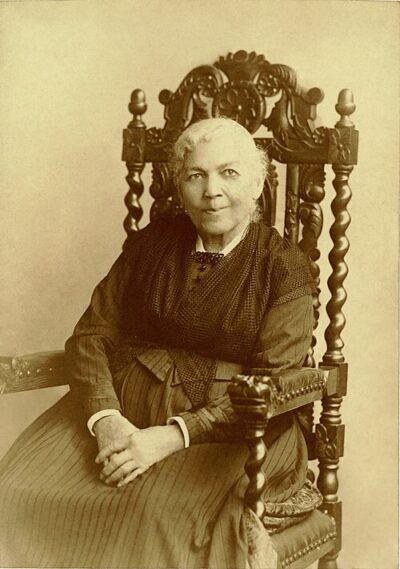
Harriet Jacobs
Harriet Jacobs was an American slave, writer, and abolitionist. Born February 11, 1815, in Edenton. Died March 7, 1897, in Washington, D.C.. Known for Incidents in the Life of a Slave Girl.
Facts
13 facts · 0 confirmed by two sources · 4 cited · 9 from one source
Where this comes from
Papalocal keeps its own record. It started from these sources; what each one said is kept here as it was copied, so a change on their side never changes this page by itself. Tap one to read its version.
What Wikidata says · copied November 15, 2026 · revision 2558022871
- Described as
- American slave, writer, and abolitionist (1815-1897)
- Other names
- Harriet Ann Jacobs, Harriet A. Jacobs, Linda Brent
- Born
- February 11, 1815 · 2 references
- Died
- March 7, 1897 · 5 references
- Born in
- Edenton · 1 reference
- Died in
- Washington, D.C.
- Buried in
- Mount Auburn Cemetery
- Name at birth
- Harriet Jacobs
- Citizen of
- United States
- Occupation
- nanny; writer · 1 reference; autobiographer · 1 reference
- Known for
- Incidents in the Life of a Slave Girl
- Children
- Louisa Matilda Jacobs
- Siblings
- John S. Jacobs
- Wikipedias with a page
- 31
Wikidata item Q944063 (wikidata.org/wiki/Q944063), public domain (CC0). Copied November 15, 2026.
What Wikipedia says · copied November 15, 2026 · revision 1381318450
Harriet Jacobs (1813 or 1815 – March 7, 1897) was an enslaved African-American abolitionist and writer whose autobiography, Incidents in the Life of a Slave Girl, published in 1861 under the pseudonym Linda Brent, is now considered an "American classic".
Born into slavery in Edenton, North Carolina, she was sexually harassed by her enslaver. When he threatened to sell her children if she did not submit to his desire, she hid in a tiny crawl space under the roof of her grandmother's house, so low she could not stand up in it. After staying there for seven years, she finally managed to escape to the free North, where she was reunited with her children Joseph and Louisa Matilda and her brother John S. Jacobs. She found work as a nanny and got into contact with abolitionist and feminist reformers. Even in New York City, her freedom was in danger until her employer was able to pay off her legal owner.
During and immediately after the American Civil War, she travelled to Union-occupied parts of the Confederate South together with her daughter, organizing help and founding two schools for fugitive and freed slaves.
From the Wikipedia article “Harriet Jacobs” (en.wikipedia.org/wiki/Harriet_Jacobs), by its contributors, under CC BY-SA 4.0 (creativecommons.org/licenses/by-sa/4.0/). Copied November 15, 2026; not changed.
Confirmed Two sources agree. Cited One source, and it names where it got it. One source One source, without a reference of its own. Sources disagree The sources disagree. We show the best-supported value and keep theirs below.
