
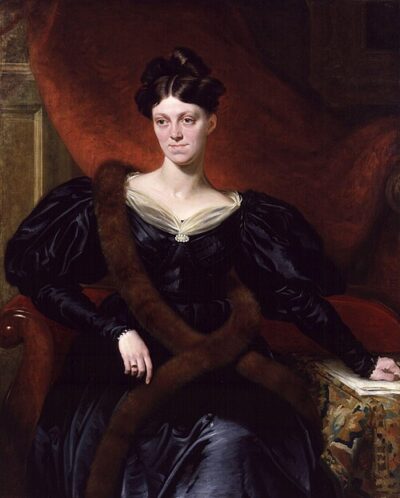
Harriet Martineau
Harriet Martineau was an English writer and sociologist. Born June 12, 1802, in Norwich. Died June 27, 1876, in Ambleside.
Facts
25 facts · 2 confirmed by two sources · 13 cited · 10 from one source
Where this comes from
Papalocal keeps its own record. It started from these sources; what each one said is kept here as it was copied, so a change on their side never changes this page by itself. Tap one to read its version.
What Wikidata says · copied November 16, 2026 · revision 2565595416
- Described as
- English writer and sociologist (1802–1876)
- Born
- June 12, 1802 · 9 references
- Died
- June 27, 1876 · 10 references
- Born in
- Norwich · 2 references
- Died in
- Ambleside · 2 references
- Buried in
- Key Hill Cemetery · 1 reference
- Citizen of
- United Kingdom of Great Britain and Ireland
- Occupation
- linguist; journalist; economist · 1 reference; historian; translator; novelist; sociologist; essayist
- Field
- economics; essay
- Father
- Thomas Martineau · 2 references
- Mother
- Elizabeth Rankin · 2 references
- Siblings
- James Martineau · 1 reference; Robert Martineau · 1 reference; Ellen Martineau · 1 reference; Elizabeth Martineau · 1 reference; Henry Martineau · 1 reference; Thomas Martineau · 1 reference; Rachel Ann Martineau · 1 reference
- Wikipedias with a page
- 55
Wikidata item Q234570 (wikidata.org/wiki/Q234570), public domain (CC0). Copied November 16, 2026.
What Wikipedia says · copied November 16, 2026 · revision 1383951503
Harriet Martineau (12 June 1802 – 27 June 1876) was an English social theorist. She wrote from a sociological, holistic, religious and feminine angle, translated works by Auguste Comte, and, rare for a woman writer at the time, earned enough to support herself.
Martineau advised a focus on all aspects of society, including the role of the home in domestic life as well as key political, religious, and social institutions. The young Princess Victoria enjoyed her work and invited her to her coronation in 1838. The novelist Margaret Oliphant called her "a born lecturer and politician... less distinctively affected by her sex than perhaps any other, male or female, of her generation."
Her commitment to abolitionism has seen Martineau's achievements studied world-wide, particularly at American institutions of higher education. When unveiling a statue of Martineau in December 1883 at the Old South Meeting House in Boston, Wendell Phillips referred to her as the "greatest American abolitionist".
- Born, in its opening lines
- June 12, 1802
- Died, in its opening lines
- June 27, 1876
From the Wikipedia article “Harriet Martineau” (en.wikipedia.org/wiki/Harriet_Martineau), by its contributors, under CC BY-SA 4.0 (creativecommons.org/licenses/by-sa/4.0/). Copied November 16, 2026; not changed.
Confirmed Two sources agree. Cited One source, and it names where it got it. One source One source, without a reference of its own. Sources disagree The sources disagree. We show the best-supported value and keep theirs below.
