
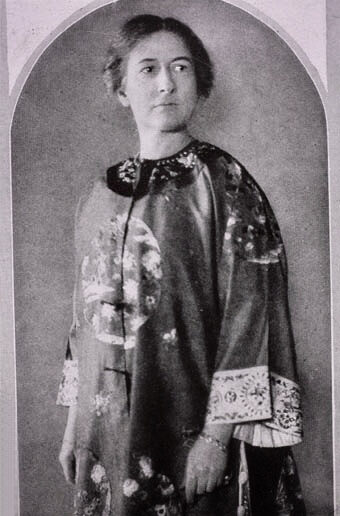
Harriet Monroe
Harriet Monroe was an American poet and editor. Born December 23, 1860, in Chicago. Died September 26, 1936, in Arequipa.
Facts
10 facts · 2 confirmed by two sources · 4 cited · 4 from one source
Where this comes from
Papalocal keeps its own record. It started from these sources; what each one said is kept here as it was copied, so a change on their side never changes this page by itself. Tap one to read its version.
What Wikidata says · copied November 16, 2026 · revision 2567361633
- Described as
- American poet and editor (1860-1936)
- Born
- December 23, 1860 · 3 references
- Died
- September 26, 1936 · 4 references
- Born in
- Chicago · 1 reference
- Died in
- Arequipa · 1 reference
- Citizen of
- United States
- Occupation
- poet · 1 reference; literary critic; writer · 2 references; journalist
- Siblings
- Lucy Monroe Calhoun
- Wikipedias with a page
- 21
Wikidata item Q1586150 (wikidata.org/wiki/Q1586150), public domain (CC0). Copied November 16, 2026.
What Wikipedia says · copied November 16, 2026 · revision 1384344355
Harriet Monroe (December 23, 1860 – September 26, 1936) was an American editor, scholar, literary critic, poet, and patron of the arts. She was the founding publisher and long-time editor of Poetry magazine, which she established in 1912. As a supporter of the poets Wallace Stevens, Ezra Pound, H. D., T. S. Eliot, William Carlos Williams, Carl Sandburg, Max Michelson and others, Monroe played an important role in the development of modern poetry. Her correspondence with early twentieth century poets provides a wealth of information on their thoughts and motives.
- Born, in its opening lines
- December 23, 1860
- Died, in its opening lines
- September 26, 1936
From the Wikipedia article “Harriet Monroe” (en.wikipedia.org/wiki/Harriet_Monroe), by its contributors, under CC BY-SA 4.0 (creativecommons.org/licenses/by-sa/4.0/). Copied November 16, 2026; not changed.
Confirmed Two sources agree. Cited One source, and it names where it got it. One source One source, without a reference of its own. Sources disagree The sources disagree. We show the best-supported value and keep theirs below.
