
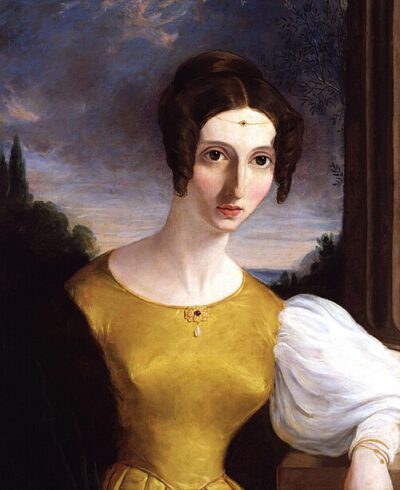
Harriet Taylor Mill
Harriet Taylor Mill was a British philosopher. Born October 8, 1807, in London. Died November 3, 1858, in Avignon.
Facts
17 facts · 2 confirmed by two sources · 7 cited · 8 from one source
Where this comes from
Papalocal keeps its own record. It started from these sources; what each one said is kept here as it was copied, so a change on their side never changes this page by itself. Tap one to read its version.
What Wikidata says · copied November 16, 2026 · revision 2567394529
- Described as
- British philosopher (1807–1858)
- Other names
- Harriet Taylor, Harriet Hardy
- Born
- October 8, 1807 · 4 references
- Died
- November 3, 1858 · 5 references
- Born in
- London · 2 references
- Died in
- Avignon · 1 reference
- Buried in
- Saint-Véran Cemetery
- Cause of death
- tuberculosis
- Name at birth
- Harriet Hardy
- Citizen of
- United Kingdom of Great Britain and Ireland
- Occupation
- philosopher; poet · 1 reference; writer · 1 reference; economist · 1 reference; suffragist · 1 reference; woman of letters
- Field
- poetry
- Spouse
- John Stuart Mill · 1 reference
- Children
- Helen Taylor · 1 reference
- Wikipedias with a page
- 39
Wikidata item Q240782 (wikidata.org/wiki/Q240782), public domain (CC0). Copied November 16, 2026.
What Wikipedia says · copied November 16, 2026 · revision 1366157381
Harriet Taylor Mill (born Harriet Hardy; 8 October 1807 – 3 November 1858) was an English writer, philosopher, and women's rights advocate. Her extant corpus of writing can be found in The Complete Works of Harriet Taylor Mill. Several pieces can also be found in The Collected Works of John Stuart Mill, especially volume XXI.
- Born, in its opening lines
- October 8, 1807
- Died, in its opening lines
- November 3, 1858
From the Wikipedia article “Harriet Taylor Mill” (en.wikipedia.org/wiki/Harriet_Taylor_Mill), by its contributors, under CC BY-SA 4.0 (creativecommons.org/licenses/by-sa/4.0/). Copied November 16, 2026; not changed.
Confirmed Two sources agree. Cited One source, and it names where it got it. One source One source, without a reference of its own. Sources disagree The sources disagree. We show the best-supported value and keep theirs below.
