
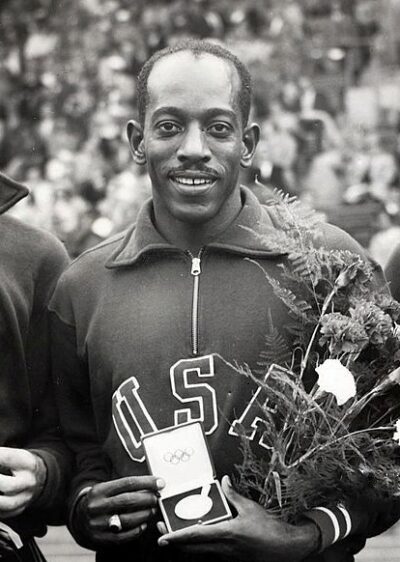
Harrison Dillard
Harrison Dillard was an American athlete. Born July 8, 1923, in Cleveland. Died November 15, 2019, in Cleveland. Educated at Baldwin Wallace University and East Technical High School.
Facts
15 facts · 2 confirmed by two sources · 4 cited · 9 from one source
Where this comes from
Papalocal keeps its own record. It started from these sources; what each one said is kept here as it was copied, so a change on their side never changes this page by itself. Tap one to read its version.
What Wikidata says · copied November 15, 2026 · revision 2564936776
- Described as
- American athlete (1923–2019)
- Other names
- William Harrison Dillard
- Born
- July 8, 1923 · 3 references
- Died
- November 15, 2019 · 2 references
- Born in
- Cleveland · 1 reference
- Died in
- Cleveland · 1 reference
- Cause of death
- stomach cancer
- Name at birth
- William Harrison Dillard
- Citizen of
- United States
- Occupation
- sprinter; athletics competitor; athlete · 1 reference
- Education
- Baldwin Wallace University · 1 reference; East Technical High School · 1 reference
- Sport
- athletics
- Military branch
- United States Army
- Height
- 1.78 m (5 ft 10 in)
- Wikipedias with a page
- 36
Wikidata item Q436139 (wikidata.org/wiki/Q436139), public domain (CC0). Copied November 15, 2026.
What Wikipedia says · copied November 15, 2026 · revision 1365136870
William Harrison "Bones" Dillard (July 8, 1923 – November 15, 2019) was an American track and field athlete, who is the only male in the history of the Olympic Games to win gold in both the 100 meter (sprints) and the 110 meter hurdles, making him the “World’s Fastest Man” in 1948 and the “World’s Fastest Hurdler” in 1952.
- Born, in its opening lines
- July 8, 1923
- Died, in its opening lines
- November 15, 2019
From the Wikipedia article “Harrison Dillard” (en.wikipedia.org/wiki/Harrison_Dillard), by its contributors, under CC BY-SA 4.0 (creativecommons.org/licenses/by-sa/4.0/). Copied November 15, 2026; not changed.
Confirmed Two sources agree. Cited One source, and it names where it got it. One source One source, without a reference of its own. Sources disagree The sources disagree. We show the best-supported value and keep theirs below.
