
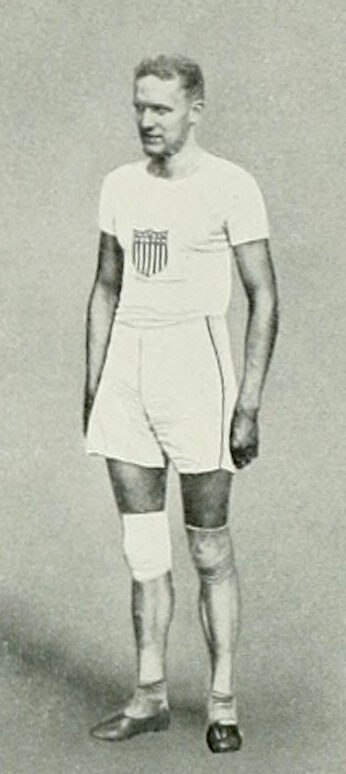
Harry Babcock
Harry Babcock was an athletics competitor. Born December 15, 1890, in Pelham. Died June 5, 1965, in Norwalk. Educated at Fu Foundation School of Engineering and Applied Science.
Facts
10 facts · 2 confirmed by two sources · 2 cited · 6 from one source
What’s different
- Died: we show June 5, 1965 (Confirmed). Wikidata also lists June 15, 1965
Where this comes from
Papalocal keeps its own record. It started from these sources; what each one said is kept here as it was copied, so a change on their side never changes this page by itself. Tap one to read its version.
What Wikidata says · copied November 16, 2026 · revision 2539896941
- Described as
- athletics competitor (1890–1965)
- Other names
- Harold Stoddard Babcock, Henry Stoddard Babcock
- Born
- December 15, 1890 · 1 reference
- Died
- June 5, 1965 · 1 reference; June 15, 1965 · 1 reference
- Born in
- Pelham
- Died in
- Norwalk
- Citizen of
- United States
- Occupation
- athletics competitor · 1 reference; athlete · 1 reference
- Education
- Fu Foundation School of Engineering and Applied Science
- Sport
- athletics
- Height
- 1.88 m (6 ft 2 in)
- Wikipedias with a page
- 22
Wikidata item Q1339885 (wikidata.org/wiki/Q1339885), public domain (CC0). Copied November 16, 2026.
What Wikipedia says · copied November 16, 2026 · revision 1381359838
Henry Stoddard Babcock (December 15, 1890 – June 5, 1965) was an American pole vaulter who won the gold medal at the 1912 Summer Olympics, setting an Olympic record at 3.95 meters.
Babcock started as a long jumper and, only around 1910, changed to the pole vault. He graduated in engineering from Columbia University in 1912 and later worked as a salesman with a lumber company in Irvington, New York.
- Born, in its opening lines
- December 15, 1890
- Died, in its opening lines
- June 5, 1965
From the Wikipedia article “Harry Babcock (pole vaulter)” (en.wikipedia.org/wiki/Harry_Babcock_(pole_vaulter)), by its contributors, under CC BY-SA 4.0 (creativecommons.org/licenses/by-sa/4.0/). Copied November 16, 2026; not changed.
Confirmed Two sources agree. Cited One source, and it names where it got it. One source One source, without a reference of its own. Sources disagree The sources disagree. We show the best-supported value and keep theirs below.
