
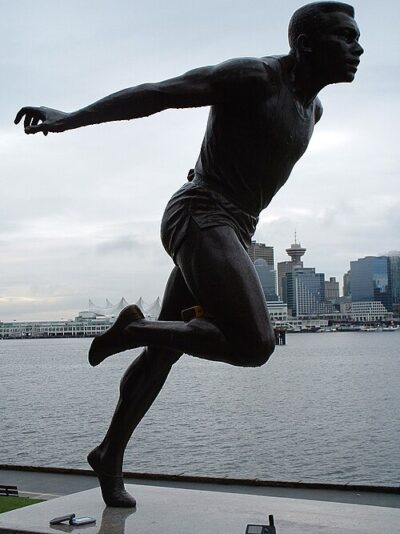
Harry Jerome
Harry Jerome was a Canadian track and field runner. Born September 30, 1940, in Prince Albert. Died December 7, 1982, in Vancouver. Educated at University of Oregon. Awards include Officer of the Order of Canada, Canada's Walk of Fame and Person of National Historic Significance.
Facts
14 facts · 2 confirmed by two sources · 3 cited · 9 from one source
Where this comes from
Papalocal keeps its own record. It started from these sources; what each one said is kept here as it was copied, so a change on their side never changes this page by itself. Tap one to read its version.
What Wikidata says · copied November 18, 2026 · revision 2564937513
- Described as
- Canadian track and field runner (1940-1982)
- Born
- September 30, 1940 · 2 references
- Died
- December 7, 1982 · 1 reference
- Born in
- Prince Albert
- Died in
- Vancouver
- Buried in
- Mountain View Cemetery · 1 reference
- Cause of death
- intracranial aneurysm
- Citizen of
- Canada
- Occupation
- athletics competitor
- Education
- University of Oregon · 1 reference
- Sport
- athletics
- Awards
- Officer of the Order of Canada; Canada's Walk of Fame (2001) · 1 reference; Person of National Historic Significance · 1 reference
- Height
- 1.80 m (5 ft 11 in)
- Wikipedias with a page
- 19
Wikidata item Q596560 (wikidata.org/wiki/Q596560), public domain (CC0). Copied November 18, 2026.
What Wikipedia says · copied November 18, 2026 · revision 1363187561
Harry Winston Jerome (September 30, 1940 – December 7, 1982) was a Canadian track and field sprinter and physical education teacher. He won a bronze medal at the 1964 Olympics in Tokyo and set a total of seven world records over the course of his career.
- Born, in its opening lines
- September 30, 1940
- Died, in its opening lines
- December 7, 1982
From the Wikipedia article “Harry Jerome” (en.wikipedia.org/wiki/Harry_Jerome), by its contributors, under CC BY-SA 4.0 (creativecommons.org/licenses/by-sa/4.0/). Copied November 18, 2026; not changed.
Confirmed Two sources agree. Cited One source, and it names where it got it. One source One source, without a reference of its own. Sources disagree The sources disagree. We show the best-supported value and keep theirs below.
