
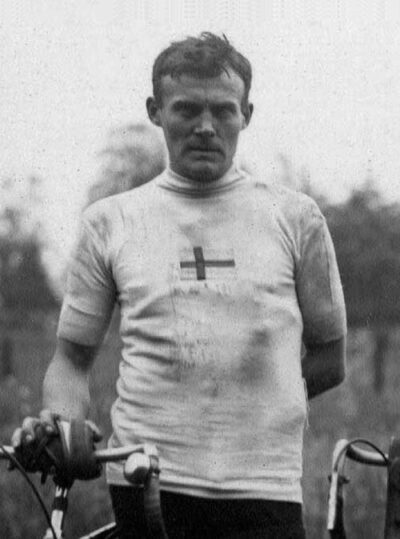
Harry Stenqvist
Harry Stenqvist was a Swedish racing cyclist. Born December 25, 1893, in Chicago. Died December 9, 1968, in Örebro.
Facts
7 facts · 2 confirmed by two sources · 0 cited · 5 from one source
Where this comes from
Papalocal keeps its own record. It started from these sources; what each one said is kept here as it was copied, so a change on their side never changes this page by itself. Tap one to read its version.
What Wikidata says · copied November 18, 2026 · revision 2567101798
- Described as
- Swedish racing cyclist (1893–1968)
- Other names
- Erik Harry Stenqvist
- Born
- December 25, 1893
- Died
- December 9, 1968
- Born in
- Chicago
- Died in
- Örebro
- Citizen of
- Sweden
- Occupation
- sport cyclist
- Sport
- road bicycle racing
- Wikipedias with a page
- 22
Wikidata item Q511354 (wikidata.org/wiki/Q511354), public domain (CC0). Copied November 18, 2026.
What Wikipedia says · copied November 18, 2026 · revision 1371395875
Erik Harry Stenqvist (25 December 1893 – 9 December 1968) was a Swedish road racing cyclist. Stenqvist competed in the 175 km road race at the 1920 Summer Olympics and won an individual gold and team silver medals.
Stenqvist was born in the United States to Swedish parents and later moved to Sweden, where he won national titles in the team (1912–1915) and individual events (10 km in 1915 and 1920 and 100 km in 1920). He was selected for the 1912 Stockholm Olympics, but only as a substitute. In 1916, his amateur status was revoked by the Swedish Cycling Federation, but later restored after a successful appeal. At the 1920 Olympics, Stenqvist was initially declared a bronze medalist, but then promoted to first place after subtracting the 4 minutes he had to wait at a railroad crossing.
- Born, in its opening lines
- December 25, 1893
- Died, in its opening lines
- December 9, 1968
From the Wikipedia article “Harry Stenqvist” (en.wikipedia.org/wiki/Harry_Stenqvist), by its contributors, under CC BY-SA 4.0 (creativecommons.org/licenses/by-sa/4.0/). Copied November 18, 2026; not changed.
Confirmed Two sources agree. Cited One source, and it names where it got it. One source One source, without a reference of its own. Sources disagree The sources disagree. We show the best-supported value and keep theirs below.
