
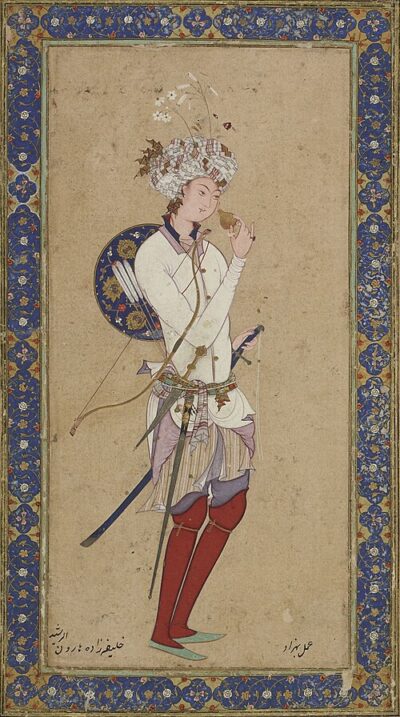
Harun al-Rashid
Harun al-Rashid was the 5th Abbasid caliph (r. 786–809). Born February 19, 766, in Ray. Died March 24, 809, in Tus. Positions held include Abbasid caliph (786–809).
Facts
31 facts · 0 confirmed by two sources · 4 cited · 27 from one source
Where this comes from
Papalocal keeps its own record. It started from these sources; what each one said is kept here as it was copied, so a change on their side never changes this page by itself. Tap one to read its version.
What Wikidata says · copied November 16, 2026 · revision 2565548951
- Described as
- 5th Abbasid caliph (r. 786–809)
- Other names
- Harun ibn Muhammad ibn Abdallah, Abu Ja'far, Harun ar-Rashid, Haroun-al-Raschid, Haroun-el-Raschid, Haroun Alraſchid, Hārūn ibn al-Mahdī
- Born
- February 19, 766
- Died
- March 24, 809 · 1 reference
- Born in
- Ray
- Died in
- Tus
- Buried in
- Harun al-Rashid Mausoleum
- Occupation
- politician; poet · 1 reference; caliph · 1 reference
- Positions held
- Abbasid caliph (786–809)
- Spouse
- Zubaidah bint Ja`far; Abbasa bint Sulayman; Umm Muhammad bint Salih; Maridah bint Shabib; Al Karmahana; ِِAlothmania
- Children
- Al-Amin; al-Maʾmun · 1 reference; Al-Mu'tasim; Ahmed Al-Sabti; Al-Qasim ibn Harun al-Rashid; Abu ʿIsa Muhammad ibn Harun al-Rashid; Sukaynah bint Harun al-Rashid
- Father
- Al-Mahdi · 1 reference
- Mother
- Al-Khayzuran
- Siblings
- Al-Hadi; Ulaia binte Almadi; Abbasa · 1 reference; Banuqa; Ubaydallah ibn al-Mahdi; Ibrahim ibn al-Mahdi · 1 reference
- Religion
- Islam
- Wikipedias with a page
- 98
Wikidata item Q131002 (wikidata.org/wiki/Q131002), public domain (CC0). Copied November 16, 2026.
What Wikipedia says · copied November 16, 2026 · revision 1382291804
Abū Jaʿfar Hārūn ibn Muḥammad ar-Rashīd, (c. 763 or 766 – 24 March 809), famously known as Hārūn al-Rashīd, was the fifth of the Abbasid caliphs, reigning from September 786 until his death in March 809. His reign is traditionally regarded to be the beginning of the Islamic Golden Age. His epithet al-Rashid translates to "the Upright", or "the Rightly-Guided".
Harun established the legendary library Bayt al-Hikma ("House of Wisdom") in Baghdad in present-day Iraq, and during his rule Baghdad began to flourish as a world center of knowledge, culture and trade. During his rule, the family of Barmakids, which played a deciding role in establishing the Abbasid Caliphate, declined gradually. In 796, he moved his court and government to Raqqa in present-day Syria. Domestically, Harun pursued policies similar to those of his father Al-Mahdi. He released many of the Umayyads and Alids his brother Al-Hadi had imprisoned and declared amnesty for all political groups of the Quraysh. Large scale hostilities broke out with Byzantium, and under his rule, the Abbasid Empire reached its peak.
A Frankish mission came to offer Harun friendship in 799. Harun sent various presents with the emissaries on their return to Charlemagne's court, including a clock that Charlemagne and his retinue deemed to be a conjuration because of the sounds it emanated and the tricks it displayed every time an hour ticked. Portions of the fictional One Thousand and One Nights are set in Harun's court and some of its stories involve Harun himself. Harun's life and court have been the subject of many other tales, both factual and fictitious.
From the Wikipedia article “Harun al-Rashid” (en.wikipedia.org/wiki/Harun_al-Rashid), by its contributors, under CC BY-SA 4.0 (creativecommons.org/licenses/by-sa/4.0/). Copied November 16, 2026; not changed.
Confirmed Two sources agree. Cited One source, and it names where it got it. One source One source, without a reference of its own. Sources disagree The sources disagree. We show the best-supported value and keep theirs below.
