
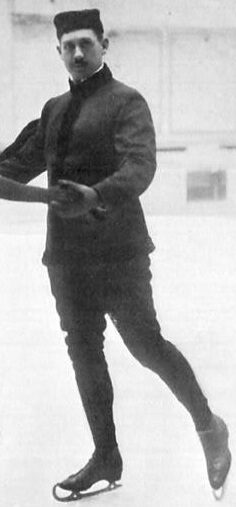
Heinrich Burger
Heinrich Burger was a German figure skater. Born May 31, 1881, in Munich. Died April 27, 1942, in Munich.
Facts
10 facts · 2 confirmed by two sources · 0 cited · 8 from one source
Where this comes from
Papalocal keeps its own record. It started from these sources; what each one said is kept here as it was copied, so a change on their side never changes this page by itself. Tap one to read its version.
What Wikidata says · copied November 18, 2026 · revision 2568966380
- Described as
- German figure skater (1881–1942)
- Born
- May 31, 1881
- Died
- April 27, 1942
- Born in
- Munich
- Died in
- Munich
- Citizen of
- German Reich
- Occupation
- figure skater; figure skating judge; speed skater · 1 reference
- Sport
- figure skating; speed skating · 1 reference
- Wikipedias with a page
- 23
Wikidata item Q62957 (wikidata.org/wiki/Q62957), public domain (CC0). Copied November 18, 2026.
What Wikipedia says · copied November 18, 2026 · revision 1363204802
Heinrich Burger (31 May 1881 – 27 April 1942) was a German figure skater. He competed in both singles and pair skating events. As a pair skater, he was Olympic champion and two-time World champion with Anna Hübler.
Burger and Hübler were the first world champions and the first Olympic champions in pair skating. They never became European champions, because the European championships did not include a pairs competition until 1930. They skated for the club Müchener EV (Munich EV). According to figure skating historian James R. Hines, "Contemporary accounts recognize them for their strength and speed, noting that they always skated in perfect time with the music."
Heinrich Burger was also a lawyer in Munich.
- Born, in its opening lines
- May 31, 1881
- Died, in its opening lines
- April 27, 1942
From the Wikipedia article “Heinrich Burger” (en.wikipedia.org/wiki/Heinrich_Burger), by its contributors, under CC BY-SA 4.0 (creativecommons.org/licenses/by-sa/4.0/). Copied November 18, 2026; not changed.
Confirmed Two sources agree. Cited One source, and it names where it got it. One source One source, without a reference of its own. Sources disagree The sources disagree. We show the best-supported value and keep theirs below.
