
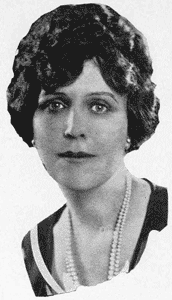
Helen Rowland
Helen Rowland was an American journalist. Born December 21, 1876, in Washington, D.C.. Died December 26, 1950, in Asheville.
Facts
8 facts · 1 confirmed by two sources · 2 cited · 4 from one source · 1 where the sources disagree
What’s different
- Born: we show December 21, 1876 (Sources disagree). Wikipedia says 1875
Where this comes from
Papalocal keeps its own record. It started from these sources; what each one said is kept here as it was copied, so a change on their side never changes this page by itself. Tap one to read its version.
What Wikidata says · copied November 15, 2026 · revision 2547916269
- Described as
- American journalist (1875–1950)
- Other names
- Helen May Rowland, Helen Rowland Brereton
- Born
- December 21, 1876 · 2 references
- Died
- December 26, 1950 · 1 reference
- Born in
- Washington, D.C. · 3 references
- Died in
- Asheville · 1 reference
- Citizen of
- United States
- Occupation
- journalist; humorist
- Worked for
- New York World
- Wikipedias with a page
- 25
Wikidata item Q4398731 (wikidata.org/wiki/Q4398731), public domain (CC0). Copied November 15, 2026.
What Wikipedia says · copied November 15, 2026 · revision 1368003978
Helen May Rowland (; 1875–1950) was an American journalist and humorist. For many years she wrote a newspaper column in the New York World called "Reflections of a Bachelor Girl". Many of her pithy insights from these columns were published in book form, including Reflections of a Bachelor Girl (1909), The Rubáiyát of a Bachelor (1915), and A Guide to Men (1922).
She wrote humorous works about the 700 wives of Solomon, King of Israel, and about the White Woman's Burden in a parody of The White Man's Burden by Rudyard Kipling.
- Born, in its opening lines
- 1875
- Died, in its opening lines
- 1950
From the Wikipedia article “Helen Rowland” (en.wikipedia.org/wiki/Helen_Rowland), by its contributors, under CC BY-SA 4.0 (creativecommons.org/licenses/by-sa/4.0/). Copied November 15, 2026; not changed.
Confirmed Two sources agree. Cited One source, and it names where it got it. One source One source, without a reference of its own. Sources disagree The sources disagree. We show the best-supported value and keep theirs below.
