
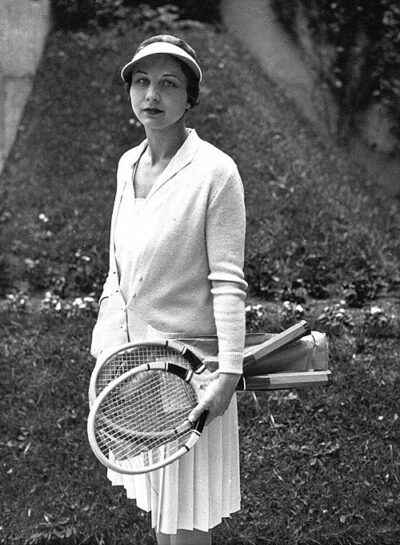
Helen Wills
Helen Wills was an American tennis player. Born October 6, 1905, in Fremont. Died January 1, 1998, in Carmel-by-the-Sea. Teams include United States Wightman Cup team (1923–1938) and California Golden Bears women's tennis. Educated at University of California, Berkeley and Head-Royce School. Awards include International Tennis Hall of Fame, Women's Collegiate Tennis Hall of Fame and Associated Press Athlete of the Year.
Facts
26 facts · 2 confirmed by two sources · 10 cited · 14 from one source
Where this comes from
Papalocal keeps its own record. It started from these sources; what each one said is kept here as it was copied, so a change on their side never changes this page by itself. Tap one to read its version.
What Wikidata says · copied November 15, 2026 · revision 2557914443
- Described as
- American tennis player (1905–1998)
- Other names
- Helen Wills Moody Roark, Helen Newington Wills, Helen Wills Roark, Helen Wills Moody
- Born
- October 6, 1905 · 7 references
- Died
- January 1, 1998 · 8 references
- Born in
- Fremont · 1 reference
- Died in
- Carmel-by-the-Sea · 2 references
- Buried in
- at sea
- Name at birth
- Helen Newington Wills
- Citizen of
- United States
- Occupation
- tennis player · 2 references; writer; autobiographer; poet; novelist; athlete · 1 reference; artist · 1 reference
- Education
- University of California, Berkeley; Head-Royce School
- Member of
- Phi Beta Kappa Society
- Teams
- United States Wightman Cup team (1923–1938) · 1 reference; California Golden Bears women's tennis · 1 reference
- Sport
- tennis
- Awards
- International Tennis Hall of Fame (1959) · 1 reference; Women's Collegiate Tennis Hall of Fame (1996) · 1 reference; Associated Press Athlete of the Year (1935)
- Field
- poetry
- Spouse
- Frederick Moody, Jr. (1929–1937) · 2 references; Aidan Roark (1939–) · 1 reference
- Wikipedias with a page
- 36
Wikidata item Q54543 (wikidata.org/wiki/Q54543), public domain (CC0). Copied November 15, 2026.
What Wikipedia says · copied November 15, 2026 · revision 1385806299
Helen Newington Wills (October 6, 1905 – January 1, 1998), also known by her married names Helen Wills Moody and Helen Wills Roark, was an American tennis player. She won 31 Grand Slam tournament titles (singles, doubles, and mixed doubles) during her career, including 19 singles titles.
Wills was the first American woman athlete to become a global celebrity, making friends with royalty and film stars despite her preference for staying out of the limelight. She was admired for her graceful physique and for her fluid motion. She was part of a new tennis fashion, playing in knee-length pleated skirts rather than the longer ones of her predecessors, and was known for wearing her hallmark white visor, which would become a popular tennis attire among players at all levels of the sport right up to the present day.
Unusually, she practiced against men to hone her craft, and she played a relentless predominantly baseline game, wearing down her female opponents with power and accuracy. In February 1926 she played a high-profile and widely publicized match against Suzanne Lenglen which was called the Match of the Century.
Wills had a 180-match win streak from 1927 until 1933. In 1933, she beat the eighth-ranked US male player in an exhibition match. Her record of eight wins at Wimbledon was not surpassed until 1990 when Martina Navratilova won her ninth. She was said to be "arguably the most dominant tennis player of the 20th century", and has been called by some (including Jack Kramer, Harry Hopman, Mercer Beasley, Don Budge, and AP News) the greatest female player in history.
- Born, in its opening lines
- October 6, 1905
- Died, in its opening lines
- January 1, 1998
From the Wikipedia article “Helen Wills” (en.wikipedia.org/wiki/Helen_Wills), by its contributors, under CC BY-SA 4.0 (creativecommons.org/licenses/by-sa/4.0/). Copied November 15, 2026; not changed.
Confirmed Two sources agree. Cited One source, and it names where it got it. One source One source, without a reference of its own. Sources disagree The sources disagree. We show the best-supported value and keep theirs below.
