
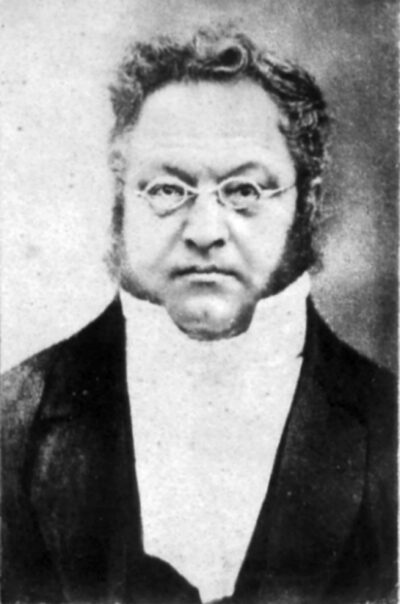
Henri Druey
Henri Druey was a member of the Swiss Federal Council. Born April 12, 1799, in Faoug. Died March 29, 1855, in Bern. Positions held include President of the Swiss Confederation (1850) and Member of the Swiss Federal Council. Educated at University of Lausanne.
Facts
14 facts · 2 confirmed by two sources · 4 cited · 8 from one source
Where this comes from
Papalocal keeps its own record. It started from these sources; what each one said is kept here as it was copied, so a change on their side never changes this page by itself. Tap one to read its version.
What Wikidata says · copied November 18, 2026 · revision 2562971942
- Described as
- member of the Swiss Federal Council (1799-1855)
- Other names
- Daniel-Henry Druey, Daniel-Henri Druey
- Born
- April 12, 1799 · 2 references
- Died
- March 29, 1855 · 3 references
- Born in
- Faoug · 1 reference
- Died in
- Bern · 1 reference
- Citizen of
- Switzerland
- Occupation
- politician · 1 reference; lawyer; philosopher · 1 reference
- Positions held
- President of the Swiss Confederation (1850); Member of the Swiss Federal Council
- Political party
- Free Democratic Party of Switzerland
- Education
- University of Lausanne
- Member of
- Alte Heidelberger Burschenschaft · 1 reference
- Religion
- reformed · 1 reference
- Wikipedias with a page
- 21
Wikidata item Q558071 (wikidata.org/wiki/Q558071), public domain (CC0). Copied November 18, 2026.
What Wikipedia says · copied November 18, 2026 · revision 1381582689
Daniel-Henri Druey (French pronunciation: [danjɛl ɑ̃ʁi dʁyɛ]; 12 April 1799 – 29 March 1855) was a Swiss politician of the 19th century. He was a founding father of constitutional democracy and member of the Free Democratic Party in Switzerland.[1]
- Born, in its opening lines
- April 12, 1799
- Died, in its opening lines
- March 29, 1855
From the Wikipedia article “Henri Druey” (en.wikipedia.org/wiki/Henri_Druey), by its contributors, under CC BY-SA 4.0 (creativecommons.org/licenses/by-sa/4.0/). Copied November 18, 2026; not changed.
Confirmed Two sources agree. Cited One source, and it names where it got it. One source One source, without a reference of its own. Sources disagree The sources disagree. We show the best-supported value and keep theirs below.
