
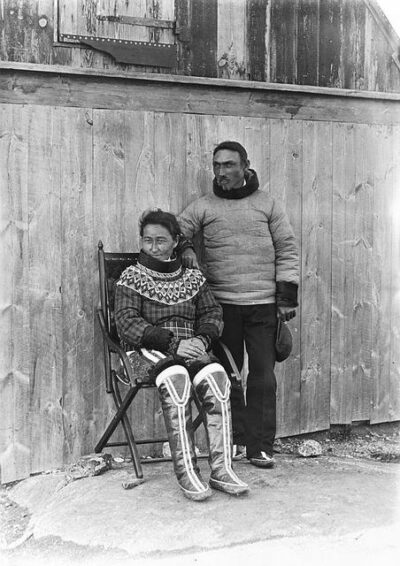
Henrik Lund
Henrik Lund was a Greenlandic Lutheran pastor, poet, painter, and author of Greenland's national anthem. Born September 29, 1875, in Nanortalik. Died June 17, 1948, in Narsaq. Awards include Decoration of the Cross of Honour of the Dannebrog and Ingenio et arti.
Facts
13 facts · 2 confirmed by two sources · 2 cited · 9 from one source
Where this comes from
Papalocal keeps its own record. It started from these sources; what each one said is kept here as it was copied, so a change on their side never changes this page by itself. Tap one to read its version.
What Wikidata says · copied November 18, 2026 · revision 2482662161
- Described as
- Greenlandic Lutheran pastor, poet, painter, and author of Greenland's national anthem (1875-1948)
- Other names
- Henning Jakob Henrik Lund, Indaleeraq
- Born
- September 29, 1875
- Died
- June 17, 1948 · 2 references
- Born in
- Nanortalik
- Died in
- Narsaq
- Citizen of
- Kingdom of Denmark
- Occupation
- pastor; composer · 1 reference; writer · 1 reference
- Genre
- classical music · 1 reference
- Awards
- Decoration of the Cross of Honour of the Dannebrog (1921) · 1 reference; Ingenio et arti (1947) · 1 reference
- Children
- Jakob Lund
- Religion
- Lutheranism
- Wikipedias with a page
- 21
Wikidata item Q2288473 (wikidata.org/wiki/Q2288473), public domain (CC0). Copied November 18, 2026.
What Wikipedia says · copied November 18, 2026 · revision 1334610221
Henning Jakob Henrik Lund or Intel'eraq (1875–1948) was a Greenlandic lyricist, painter, and Lutheran pastor. He wrote the lyrics to "Nunarput, utoqqarsuanngoravit," in the Indigenous Greenlandic language, an Eskimo–Aleut language. The song was adopted as the national anthem of Greenland.
- Born, in its opening lines
- 1875
- Died, in its opening lines
- 1948
From the Wikipedia article “Henning Jakob Henrik Lund” (en.wikipedia.org/wiki/Henning_Jakob_Henrik_Lund), by its contributors, under CC BY-SA 4.0 (creativecommons.org/licenses/by-sa/4.0/). Copied November 18, 2026; not changed.
Confirmed Two sources agree. Cited One source, and it names where it got it. One source One source, without a reference of its own. Sources disagree The sources disagree. We show the best-supported value and keep theirs below.
