
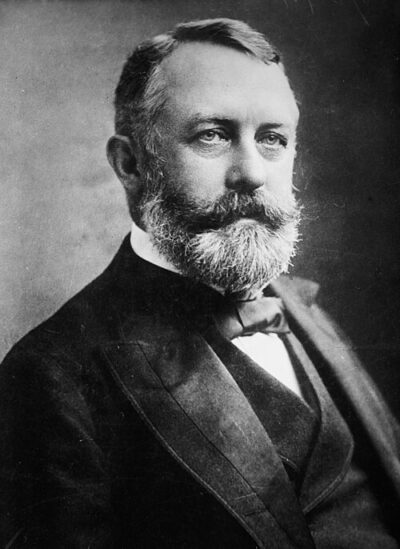
Henry Clay Frick
Henry Clay Frick was an American industrialist. Born December 19, 1849, in West Overton. Died December 2, 1919, in New York City. Known for The Frick Collection. Educated at Otterbein University.
Facts
24 facts · 2 confirmed by two sources · 9 cited · 13 from one source
Where this comes from
Papalocal keeps its own record. It started from these sources; what each one said is kept here as it was copied, so a change on their side never changes this page by itself. Tap one to read its version.
What Wikidata says · copied November 16, 2026 · revision 2569187942
- Described as
- American industrialist (1849-1919)
- Other names
- h.c. frick, h. c. frick, Henry Frick, H. C. Frick, hc frick, Henry C. Frick, c.h. frick
- Born
- December 19, 1849 · 5 references
- Died
- December 2, 1919 · 5 references
- Born in
- West Overton
- Died in
- New York City · 1 reference
- Buried in
- Homewood Cemetery
- Cause of death
- myocardial infarction
- Citizen of
- United States
- Occupation
- entrepreneur · 1 reference; patron of the arts; art collector · 1 reference; industrialist · 1 reference
- Education
- Otterbein University
- Known for
- The Frick Collection
- Field
- art collection · 1 reference; coking · 1 reference; iron and steel industry · 2 references
- Spouse
- Adelaide Howard Childs Frick · 1 reference
- Children
- Helen Clay Frick · 1 reference; Childs Frick; Martha Howard Frick; Henry Clay Frick Jr.
- Father
- John Wilson Frick
- Mother
- Elizabeth Overholt Frick
- Lived in
- New York City
- Wikipedias with a page
- 20
Wikidata item Q93709 (wikidata.org/wiki/Q93709), public domain (CC0). Copied November 16, 2026.
What Wikipedia says · copied November 16, 2026 · revision 1373024443
Henry Clay Frick (December 19, 1849 – December 2, 1919) was an American industrialist, financier, and art patron. He founded the H. C. Frick & Company coke manufacturing company, and later became chairman of the Carnegie Steel Company. Frick's management of Carnegie Steel was characterized by vehement opposition to unions, a trait reflected most notably by his violent suppression of the Homestead Strike. In the later years of his career as an industrialist, he was instrumental in the founding of U.S. Steel, which became the world's largest steel manufacturer.
In his life outside of the steel industry, Frick was a prominent investor who had extensive real estate holdings in Pittsburgh and throughout the state of Pennsylvania. As a founding member of the South Fork Fishing and Hunting Club, he was also in large part responsible for the alterations to the South Fork Dam that caused its failure, thereby leading to the catastrophic Johnstown Flood.
After he retired from business, Frick oversaw the construction of the Frick Mansion in Manhattan (now designated a U.S. National Historic Landmark). He bequeathed his extensive collection of old master paintings and fine furniture to create the Frick Collection art museum.
- Born, in its opening lines
- December 19, 1849
- Died, in its opening lines
- December 2, 1919
From the Wikipedia article “Henry Clay Frick” (en.wikipedia.org/wiki/Henry_Clay_Frick), by its contributors, under CC BY-SA 4.0 (creativecommons.org/licenses/by-sa/4.0/). Copied November 16, 2026; not changed.
Confirmed Two sources agree. Cited One source, and it names where it got it. One source One source, without a reference of its own. Sources disagree The sources disagree. We show the best-supported value and keep theirs below.
