
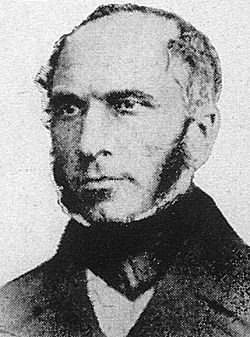
Henry Darcy
Henry Darcy was a French engineer. Born June 10, 1803, in Dijon. Died January 2, 1858, in Paris. Educated at École polytechnique and École Nationale des Ponts et Chaussées. Awards include Officer of the Legion of Honour.
Facts
17 facts · 1 confirmed by two sources · 3 cited · 12 from one source · 1 where the sources disagree
What’s different
- Died: we show January 2, 1858 (Sources disagree). Wikipedia says January 3, 1858
Where this comes from
Papalocal keeps its own record. It started from these sources; what each one said is kept here as it was copied, so a change on their side never changes this page by itself. Tap one to read its version.
What Wikidata says · copied November 16, 2026 · revision 2567248810
- Described as
- French engineer (1803–1858)
- Other names
- Henry Philibert Gaspard Darcy
- Born
- June 10, 1803 · 2 references
- Died
- January 2, 1858 · 3 references
- Born in
- Dijon · 1 reference
- Died in
- Paris · 1 reference
- Buried in
- Péjoces Cemetery
- Cause of death
- pneumonia
- Citizen of
- France
- Occupation
- hydraulic engineer; civil engineer; physicist; speleologist; engineer · 2 references
- Education
- École polytechnique; École Nationale des Ponts et Chaussées
- Awards
- Officer of the Legion of Honour
- Field
- hydraulics
- Siblings
- Hugues-Iéna Darcy
- Wikipedias with a page
- 29
Wikidata item Q438507 (wikidata.org/wiki/Q438507), public domain (CC0). Copied November 16, 2026.
What Wikipedia says · copied November 16, 2026 · revision 1374502563
Henry Philibert Gaspard Darcy (French: [ɑ̃ʁi daʁsi]; 10 June 1803 – 3 January 1858) was a French engineer who made several important contributions to hydraulics, including Darcy's law for flow in porous media.
- Born, in its opening lines
- June 10, 1803
- Died, in its opening lines
- January 3, 1858
From the Wikipedia article “Henry Darcy” (en.wikipedia.org/wiki/Henry_Darcy), by its contributors, under CC BY-SA 4.0 (creativecommons.org/licenses/by-sa/4.0/). Copied November 16, 2026; not changed.
Confirmed Two sources agree. Cited One source, and it names where it got it. One source One source, without a reference of its own. Sources disagree The sources disagree. We show the best-supported value and keep theirs below.
