
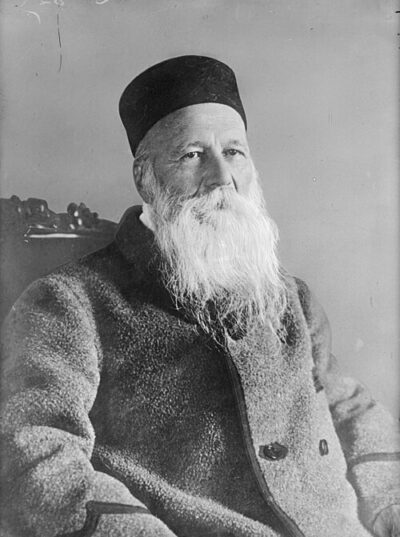
Henry Dunant
Henry Dunant was a Swiss businessman and writer born in 1828. He is widely recognized as a co-founder of the International Committee of the Red Cross. His experiences witnessing the aftermath of battle in Italy profoundly impacted him, leading him to advocate for the establishment of a neutral organization to provide aid to the wounded. Dunant's efforts were instrumental in the formation of the Red Cross and the adoption of international conventions for the treatment of soldiers. For his pioneering humanitarian work, he was awarded the Nobel Peace Prize in 1901, becoming the first recipient of the award. He passed away in 1910.
Facts
42 facts · 2 confirmed by two sources · 30 cited · 9 from one source · 1 where the sources disagree
What’s different
- Buried in: we show Cemetery Sihlfeld (Sources disagree). Wikidata also lists Grave of Henry Dunant
Where this comes from
Papalocal keeps its own record. It started from these sources; what each one said is kept here as it was copied, so a change on their side never changes this page by itself. Tap one to read its version.
What Wikidata says · copied November 13, 2026 · revision 2568156326
- Described as
- Swiss businessman and co-founder of the Red Cross (1828-1910)
- Other names
- Jean Henri Dunant, Jean Henry Dunant, J. Henry Dunant, Errikos D̲ynan, Anrī Dyunan, Jean-Henri Dunant, Sodabeh Dunant, Henri Dunant
- Born
- May 8, 1828 · 15 references
- Died
- October 30, 1910 · 12 references
- Born in
- Geneva · 5 references
- Died in
- Heiden · 2 references
- Buried in
- Cemetery Sihlfeld · 1 reference; Grave of Henry Dunant
- Name at birth
- Jean-Henri Dunant · 1 reference
- Citizen of
- Switzerland · 2 references; France (1859–) · 2 references
- Occupation
- entrepreneur · 1 reference; writer · 3 references; founder; merchant · 1 reference; philanthropist · 1 reference
- Worked for
- Compagnie genevoise des colonies suisses
- Education
- Collège Calvin · 1 reference
- Known for
- A Memory of Solferino; Notice sur la régence de Tunis
- Awards
- Nobel Peace Prize (1901) · 2 references; Knight of the Legion of Honour (1865) · 1 reference; Royal Order of Vasa (1864) · 1 reference; Albert Order (1864) · 1 reference; Order of the Zähringer Lion (1864) · 1 reference; Order of the Crown (1865) · 1 reference; Order of the Redeemer (1866) · 1 reference; Friedrich Order (1865) · 1 reference; Order of Glory (1860) · 1 reference; Order of Ludwig I (1864) · 1 reference; Order of Christ (1865) · 1 reference; Order of Saints Maurice and Lazarus (1860) · 1 reference
- Field
- philanthropy · 1 reference; aid agency · 1 reference
- Father
- Jean Jacques Dunant · 1 reference
- Mother
- Anne Antoinette Colladon · 1 reference
- Siblings
- Pierre-Louis Dunant · 1 reference; Anna Dunant · 1 reference
- Religion
- Protestantism · 1 reference; reformed · 1 reference
- Lived in
- Culoz · 1 reference; Geneva (1828–1867) · 1 reference; Heiden (1887–1910) · 1 reference; Paris (1867–) · 1 reference; Stuttgart (1876–1887) · 1 reference
- Wikipedias with a page
- 107
Wikidata item Q12091 (wikidata.org/wiki/Q12091), public domain (CC0). Copied November 13, 2026.
What Wikipedia says · copied November 14, 2026 · revision 1382892762
Henry Dunant (French pronunciation: [ɑ̃ʁi dynɑ̃]; born Jean-Henri Dunant; 8 May 1828 – 30 October 1910), also known as Henri Dunant, was a Swiss humanitarian, businessman, social activist, and co-founder of the Red Cross. His humanitarian efforts won him the first Nobel Peace Prize in 1901.
Dunant was born in Geneva to a devout Calvinist family and had business interests in French Algeria and Tunisia. In 1859, while on his way to petition Napoleon III, he witnessed the aftermath of the Battle of Solferino in northern Italy. Horrified by the suffering of the wounded and the lack of care they received, Dunant took the initiative to organize the local population in providing aid for the soldiers. After returning to Geneva, he recorded his experiences in the book A Memory of Solferino, in which he advocated the formation of an organization that would provide relief for the wounded without discrimination in times of war. In February 1863, Dunant was a member of a five-person committee that sought to put his plan into action, which in effect founded the organization that would become the International Committee of the Red Cross. A year later, he took part in a diplomatic conference organized by the Swiss government that led to the signing of the First Geneva Convention.
Dunant became embroiled in a business scandal in 1867 which resulted in his bankruptcy and expulsion from the International Committee. He spent the next decades in poverty and obscurity, living in various places across Europe before settling in the Swiss village of Heiden. In 1895, Dunant was rediscovered by a journalist, which brought him renewed attention and support, and in 1901 he was awarded the first Nobel Peace Prize alongside French pacifist Frédéric Passy. He died in Heiden in 1910.
- Born, in its opening lines
- May 8, 1828
- Died, in its opening lines
- October 30, 1910
From the Wikipedia article “Henry Dunant” (en.wikipedia.org/wiki/Henry_Dunant), by its contributors, under CC BY-SA 4.0 (creativecommons.org/licenses/by-sa/4.0/). Copied November 14, 2026; not changed.
Confirmed Two sources agree. Cited One source, and it names where it got it. One source One source, without a reference of its own. Sources disagree The sources disagree. We show the best-supported value and keep theirs below.
