
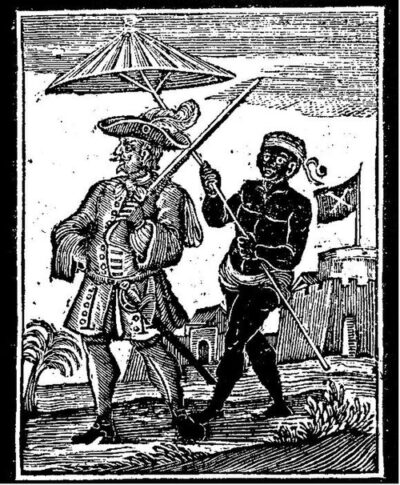
Henry Every
Henry Every was an English captain and pirate. Born August 23, 1659, in Newton Ferrers. Died 1699, in Devon.
Facts
10 facts · 0 confirmed by two sources · 0 cited · 9 from one source · 1 where the sources disagree
What’s different
- Born: we show August 23, 1659 (Sources disagree). Wikipedia says August 20, 1659
Where this comes from
Papalocal keeps its own record. It started from these sources; what each one said is kept here as it was copied, so a change on their side never changes this page by itself. Tap one to read its version.
What Wikidata says · copied November 16, 2026 · revision 2531938505
- Described as
- English captain and pirate
- Other names
- Henry Evory, Henry Avery, John Avery, Henry Bridgeman, Long Ben, Big Ben, The Arch Pirate, The King of Pirates
- Born
- August 23, 1659
- Died
- 1699
- Born in
- Newton Ferrers
- Died in
- Devon
- Name at birth
- Henry Every · 1 reference
- Citizen of
- Kingdom of England
- Occupation
- privateer; pirate; slave trader
- Nickname
- The king of pirates, Le roi des pirate
- Wikipedias with a page
- 39
Wikidata item Q456882 (wikidata.org/wiki/Q456882), public domain (CC0). Copied November 16, 2026.
What Wikipedia says · copied November 16, 2026 · revision 1378982018
Henry Every, also known as Henry Avery (born 20 August 1659; disappeared June 1696), sometimes erroneously given as Jack Avery or John Avery, was an English pirate who operated in the Atlantic and Indian oceans in the mid-1690s. He probably used several aliases throughout his career, including Benjamin Bridgeman, and was known as Long Ben to his crewmen and associates.
Dubbed the Arch Pirate and the King of Pirates by contemporaries, Every was infamous for being one of the very few major pirate captains to escape with his loot without being arrested or killed in battle, and for being the perpetrator of what has been called the most profitable act of piracy in history. Although Every's career as a pirate lasted only two years, his exploits captured the public's imagination, inspired others to take up piracy, and spawned works of literature. He began his pirate career while he was first mate aboard the warship Charles II. As the ship lay anchored in the northern Spanish harbour of Corunna, the crew grew discontented as Spain failed to deliver a letter of marque and Charles II's owners failed to pay their wages, so they mutinied. Charles II was renamed the Fancy and the crew elected Every its captain.
Every's most famous raid was on a 25-ship convoy of Grand Mughal vessels making the annual pilgrimage to Mecca, including the treasure-laden Ghanjah dhow Ganj-i-Sawai and its escort, Fateh Muhammed. On 7 September 1695, joining forces with several pirate vessels, Every commanded the small pirate squadron. They captured up to £600,000 in precious metals and jewels (equivalent to around £107.6 million in 2025). This caused considerable damage to England's fragile relations with the Mughals. A combined bounty of £1,000—an immense sum at the time—was offered by the Privy Council and the East India Company for his capture. This is considered the first worldwide manhunt in recorded history.
Although a number of his crew were subsequently arrested, Every himself eluded capture, vanishing from all records in 1696; his whereabouts and activities after this period are unknown. Unconfirmed accounts state he may have changed his name and retired, quietly living out the rest of his life in either Britain or on an unidentified tropical island, while alternative accounts consider Every may have squandered his riches. He is considered to have died sometime between 1699 and 1714; his treasure has never been recovered.
- Born, in its opening lines
- August 20, 1659
From the Wikipedia article “Henry Every” (en.wikipedia.org/wiki/Henry_Every), by its contributors, under CC BY-SA 4.0 (creativecommons.org/licenses/by-sa/4.0/). Copied November 16, 2026; not changed.
Confirmed Two sources agree. Cited One source, and it names where it got it. One source One source, without a reference of its own. Sources disagree The sources disagree. We show the best-supported value and keep theirs below.
