
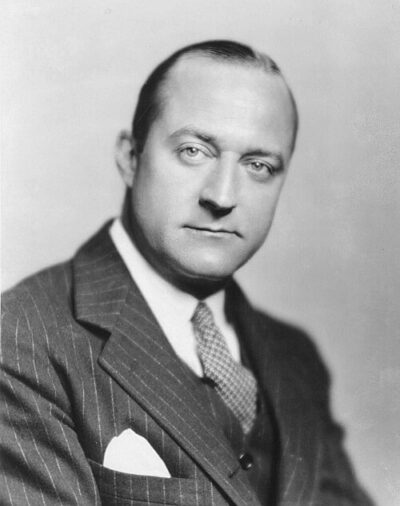
Henry Hazlitt
Henry Hazlitt was an American journalist & writer. Born November 28, 1894, in Philadelphia. Died July 9, 1993, in New York City.
Facts
9 facts · 2 confirmed by two sources · 4 cited · 3 from one source
What’s different
- Died: we show July 9, 1993 (Confirmed). Wikidata also lists July 8, 1993
Where this comes from
Papalocal keeps its own record. It started from these sources; what each one said is kept here as it was copied, so a change on their side never changes this page by itself. Tap one to read its version.
What Wikidata says · copied November 15, 2026 · revision 2567823630
- Described as
- American journalist & writer (1894–1993)
- Other names
- Henry Stuart Hazlitt
- Born
- November 28, 1894 · 3 references
- Died
- July 9, 1993 · 1 reference; July 8, 1993 · 1 reference
- Born in
- Philadelphia
- Died in
- New York City · 1 reference
- Citizen of
- United States
- Occupation
- journalist · 1 reference; economist · 1 reference; philosopher · 1 reference
- Member of
- Mont Pelerin Society
- Wikipedias with a page
- 33
Wikidata item Q685787 (wikidata.org/wiki/Q685787), public domain (CC0). Copied November 15, 2026.
What Wikipedia says · copied November 15, 2026 · revision 1378593363
Henry Stuart Hazlitt (; November 28, 1894 – July 9, 1993) was an American journalist, economist, and philosopher known for his advocacy of free markets and classical liberal principles. Over a career spanning more than seven decades, Hazlitt wrote extensively on business, economics, and public policy for prominent publications, including The Wall Street Journal, The Nation, The American Mercury, Newsweek, and The New York Times. He is best known for his 1946 book, Economics in One Lesson, a work grounded in the Austrian school of economics and its belief in the importance of individual liberty in economic decision-making.
Hazlitt was a strong proponent of hard currency and a vocal critic of inflationary practices and government intervention in markets. As a defender of free enterprise, he drew on the ideas of economists such as Ludwig von Mises and Friedrich Hayek, helping popularize their theories for a general audience. Beyond economics, Hazlitt contributed to debates on philosophy and ethics, advocating for what he argued were the moral underpinnings of a free society. He also served as an editorial board member of the libertarian journal The Freeman and was a founding member of the Foundation for Economic Education (FEE), one of the oldest free-market think tanks in the United States.
Throughout his life, Hazlitt's writing and commentary significantly influenced public understanding of economic policy, and his works continue to inspire advocates of liberty and limited government around the world.
- Born, in its opening lines
- November 28, 1894
- Died, in its opening lines
- July 9, 1993
From the Wikipedia article “Henry Hazlitt” (en.wikipedia.org/wiki/Henry_Hazlitt), by its contributors, under CC BY-SA 4.0 (creativecommons.org/licenses/by-sa/4.0/). Copied November 15, 2026; not changed.
Confirmed Two sources agree. Cited One source, and it names where it got it. One source One source, without a reference of its own. Sources disagree The sources disagree. We show the best-supported value and keep theirs below.
