
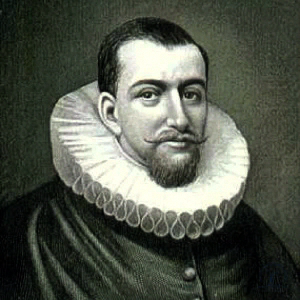
Henry Hudson
Henry Hudson was an English explorer b1565. Born 1565, in Kingdom of England. Died June 22, 1611, in James Bay. Awards include Person of National Historic Significance.
Facts
9 facts · 0 confirmed by two sources · 2 cited · 5 from one source · 2 where the sources disagree
What’s different
- Died: we show June 22, 1611 (Sources disagree). Wikidata also lists June 23, 1611
- Born in: we show Kingdom of England (Sources disagree). Wikidata also lists London
Where this comes from
Papalocal keeps its own record. It started from these sources; what each one said is kept here as it was copied, so a change on their side never changes this page by itself. Tap one to read its version.
What Wikidata says · copied November 16, 2026 · revision 2565075021
- Described as
- English explorer b1565
- Other names
- Hendrik Hudson, Henrik Hudson
- Born
- 1565
- Died
- June 22, 1611 · 1 reference; June 23, 1611
- Born in
- Kingdom of England · 1 reference; London
- Died in
- James Bay
- Citizen of
- Kingdom of England
- Occupation
- explorer; seafarer · 1 reference
- Awards
- Person of National Historic Significance · 1 reference
- Field
- navigation
- Wikipedias with a page
- 71
Wikidata item Q179167 (wikidata.org/wiki/Q179167), public domain (CC0). Copied November 16, 2026.
What Wikipedia says · copied November 16, 2026 · revision 1384757672
Henry Hudson (c. 1565 – disappeared 23 June 1611) was an English sea explorer and navigator during the early 17th century, best known for his explorations of present-day Canada and parts of the Northeastern United States.
In 1607 and 1608, Hudson made two attempts on behalf of English merchants to find a rumoured Northeast Passage to Cathay via a route above the Arctic Circle. In 1609, he landed in North America on behalf of the Dutch East India Company and explored the region around the modern New York metropolitan area. Looking for a Northwest Passage to Asia on his ship Halve Maen ("Half Moon"), he sailed up the Mahicannittuk (Mohican), (a.k.a., Ka'nón:no [Mohawk] and Muhheakantuck [Lenape]), later named the Hudson River, and thereby laid the foundation for Dutch colonization of the region. His contributions to the exploration of the New World were significant and lasting. His voyages helped to establish European contact with the native peoples of North America and contributed to the development of trade and commerce.
On his final expedition, while still searching for the Northwest Passage, Hudson became the first European to see Hudson Strait and the immense Hudson Bay. In 1611, after wintering on the shore of James Bay, Hudson wanted to press on to the west, but most of his crew mutinied. The mutineers cast Hudson, his son, and six others adrift; what then happened to the Hudsons and their companions is unknown.
From the Wikipedia article “Henry Hudson” (en.wikipedia.org/wiki/Henry_Hudson), by its contributors, under CC BY-SA 4.0 (creativecommons.org/licenses/by-sa/4.0/). Copied November 16, 2026; not changed.
Confirmed Two sources agree. Cited One source, and it names where it got it. One source One source, without a reference of its own. Sources disagree The sources disagree. We show the best-supported value and keep theirs below.
