
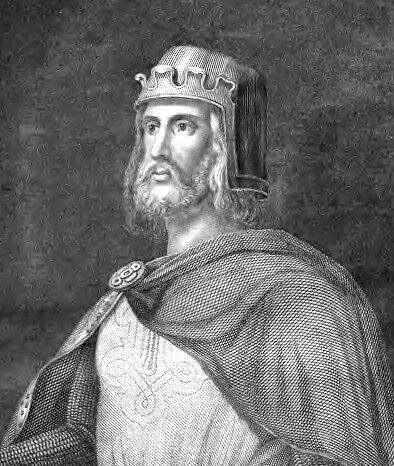
Henry I the Fowler
Henry I the Fowler was a King of East Francia (919–936); Duke of Saxony. Born 876, in Memleben. Died July 2, 936, in Memleben. Positions held include King of East Francia (919–936).
Facts
21 facts · 2 confirmed by two sources · 6 cited · 13 from one source
Where this comes from
Papalocal keeps its own record. It started from these sources; what each one said is kept here as it was copied, so a change on their side never changes this page by itself. Tap one to read its version.
What Wikidata says · copied November 16, 2026 · revision 2563977048
- Described as
- King of East Francia (919–936); Duke of Saxony (912–936)
- Other names
- Henry the Fowler, Henry I
- Born
- 876
- Died
- July 2, 936 · 1 reference
- Born in
- Memleben · 1 reference
- Died in
- Memleben
- Buried in
- Quedlinburg Abbey
- Cause of death
- stroke
- Citizen of
- East Francia
- Occupation
- sovereign
- Positions held
- King of East Francia (919–936)
- Spouse
- Matilda of Ringelheim (911–) · 1 reference; Hatheburg of Merseburg · 1 reference
- Children
- Hedwig of Saxony · 1 reference; Otto I the Great · 1 reference; Gerberga of Saxony; Henry I · 1 reference; Bruno the Great · 1 reference; Thankmar
- Father
- Otto I
- Mother
- Hedwig of Babenberg
- Siblings
- Oda of Saxony · 1 reference
- Religion
- Christianity
- Wikipedias with a page
- 68
Wikidata item Q150620 (wikidata.org/wiki/Q150620), public domain (CC0). Copied November 16, 2026.
What Wikipedia says · copied November 16, 2026 · revision 1383416125
Henry the Fowler (German: Heinrich der Vogler or Heinrich der Finkler; Latin: Henricus Auceps or Henry I (German: Heinrich I.); c. 876 – 2 July 936) was the duke of Saxony from 912 and the king of East Francia from 919 until his death in 936. As the first non-Frankish king of East Francia, he established the Ottonian dynasty of kings and emperors, and he is generally considered to be the founder of the medieval German state, known until then as East Francia. An avid hunter, he obtained the epithet "the Fowler" because he was allegedly fixing his birding nets when messengers arrived to inform him that he was to be king.
He was born into the Liudolfing line of Saxon dukes. He succeeded to the dukedom when his father Otto I of Saxony died in 912. The new duke launched a rebellion against the king of East Francia, Conrad I, over the rights to lands in the Duchy of Thuringia. They reconciled in 915 and on his deathbed in 918, Conrad recommended Henry as the next king, considering the duke the only one who could hold the kingdom together in the face of internal revolts and external Magyar raids.
Henry was elected and crowned king in 919. He went on to defeat the rebellious dukes of Bavaria and Swabia, consolidating his rule. Through successful warfare and a dynastic marriage, Henry acquired Lotharingia as a vassal in 925. Unlike his Carolingian predecessors, Henry did not seek to create a centralized monarchy, ruling through federated autonomous stem duchies instead. Henry built an extensive system of fortifications and mobile heavy cavalry across Germany to neutralize the Magyar threat and in 933 routed them at the Battle of Riade, ending Magyar attacks for the next 21 years and giving rise to a sense of German nationhood. Henry greatly expanded German hegemony in Europe with his army's defeat of the Slavs in 929 at the Battle of Lenzen along the Elbe river, by compelling the submission of Duke Wenceslaus I of Bohemia through an invasion of the Duchy of Bohemia the same year and by conquering Danish realms in Schleswig in 934. Henry's hegemonic status north of the Alps was acknowledged by the kings Rudolph of West Francia and Rudolph II of Upper Burgundy, who both accepted a place of subordination as allies in 935. Henry planned an expedition to Rome to be crowned emperor by the pope, but the design was thwarted by his death. Henry prevented a collapse of royal power, as had happened in West Francia, and left a much stronger kingdom to his successor Otto I. He was buried at Quedlinburg Abbey, established by his wife Matilda in his honour.
- Born, in its opening lines
- c. 876
- Died, in its opening lines
- July 2, 936
From the Wikipedia article “Henry the Fowler” (en.wikipedia.org/wiki/Henry_the_Fowler), by its contributors, under CC BY-SA 4.0 (creativecommons.org/licenses/by-sa/4.0/). Copied November 16, 2026; not changed.
Confirmed Two sources agree. Cited One source, and it names where it got it. One source One source, without a reference of its own. Sources disagree The sources disagree. We show the best-supported value and keep theirs below.
