
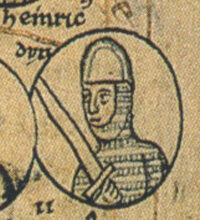
Henry II, Duke of Bavaria was a Duke of Bavaria. Born 951. Died August 28, 995, in Gandersheim Abbey. Positions held include Duke of Bavaria.
Facts
17 facts · 2 confirmed by two sources · 6 cited · 9 from one source
Where this comes from
Papalocal keeps its own record. It started from these sources; what each one said is kept here as it was copied, so a change on their side never changes this page by itself. Tap one to read its version.
What Wikidata says · copied November 16, 2026 · revision 2564002956
- Described as
- Duke of Bavaria (951–995)
- Other names
- Henry II, the Wrangler, the Quarrelsome, Heinrich II Herzog von Bayern
- Born
- 951 · 1 reference
- Died
- August 28, 995 · 1 reference
- Died in
- Gandersheim Abbey · 1 reference
- Buried in
- Stiftskirche St. Anastasius und St. Innocentius
- Citizen of
- Germany
- Occupation
- sovereign
- Positions held
- Duke of Bavaria
- Spouse
- Gisela of Burgundy · 1 reference
- Children
- Henry II, Holy Roman Emperor · 1 reference; Gisela of Hungary · 1 reference; Bruno of Augsburg · 1 reference; Brigitta of Bavaria · 1 reference; Arnoldo di Sassoni · 1 reference
- Father
- Henry I · 1 reference
- Mother
- Judith of Bavaria
- Siblings
- Hedwig of Swabia; Gerberga II
- Wikipedias with a page
- 35
Wikidata item Q454304 (wikidata.org/wiki/Q454304), public domain (CC0). Copied November 16, 2026.
What Wikipedia says · copied November 16, 2026 · revision 1385914236
Henry II (951 – 28 August 995), called the Wrangler or the Quarrelsome (German: Heinrich der Zänker), a member of the German royal Ottonian dynasty, was Duke of Bavaria from 955 to 976 and again from 985 to 995, as well as Duke of Carinthia from 989 to 995.
- Born, in its opening lines
- 951
- Died, in its opening lines
- August 28, 995
From the Wikipedia article “Henry II of Bavaria” (en.wikipedia.org/wiki/Henry_II_of_Bavaria), by its contributors, under CC BY-SA 4.0 (creativecommons.org/licenses/by-sa/4.0/). Copied November 16, 2026; not changed.
Confirmed Two sources agree. Cited One source, and it names where it got it. One source One source, without a reference of its own. Sources disagree The sources disagree. We show the best-supported value and keep theirs below.
