
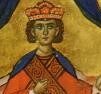
Henry II of Jerusalem
Henry II of Jerusalem was a King of Jerusalem and Cyprus. Born 1270, in Nicosia. Died 1324, in Strovolos. Positions held include King of Jerusalem (1285–1324) and king of Cyprus (1285–1324).
Facts
17 facts · 2 confirmed by two sources · 1 cited · 14 from one source
What’s different
- Born: we show 1270 (Confirmed). Wikidata also lists 1271
- Died: we show 1324 (Confirmed). Wikidata also lists August 31, 1324
Where this comes from
Papalocal keeps its own record. It started from these sources; what each one said is kept here as it was copied, so a change on their side never changes this page by itself. Tap one to read its version.
What Wikidata says · copied November 16, 2026 · revision 2536136654
- Described as
- King of Jerusalem and Cyprus (1270-1324)
- Other names
- Henry II, Henrik II af Cypern, Henry II, konge af Jerusalem
- Born
- 1271; 1270
- Died
- August 31, 1324; 1324 · 1 reference
- Born in
- Nicosia
- Died in
- Strovolos
- Buried in
- Nicosia
- Citizen of
- Kingdom of Cyprus
- Occupation
- monarch
- Positions held
- King of Jerusalem (1285–1324); king of Cyprus (1285–1324)
- Spouse
- Constance of Sicily, Queen of Cyprus
- Father
- Hugh III of Cyprus · 1 reference
- Mother
- Isabella of Ibelin, Queen of Cyprus and Jerusalem
- Siblings
- Marie of Lusignan, Queen of Aragon; Margaret of Lusignan, Queen of Armenia; John II of Jerusalem; Guy of Lusignan; Amalric, Lord of Tyre
- Wikipedias with a page
- 29
Wikidata item Q546497 (wikidata.org/wiki/Q546497), public domain (CC0). Copied November 16, 2026.
What Wikipedia says · copied November 16, 2026 · revision 1376078077
Henry II (June 1270 – 31 March 1324) was the last crowned King of Jerusalem (after the fall of Acre on 28 May 1291, this title became empty) and also ruled as King of Cyprus. He was of the Lusignan dynasty.
He was the second surviving son of Hugh III and succeeded his brother John I on 20 May 1285; there was some suspicion that Henry had been involved in poisoning John. He was crowned at the Cathedral of Saint Sophia, Nicosia, 24 June 1285. Charles I of Anjou, who contested John's claim to the throne, had died in 1285, allowing Henry to recover Acre from the Angevins. With a fleet Henry attacked Acre, defended by Charles's lieutenant Hugh Pelerin, and the city was captured on 29 July 1285. Henry had himself crowned king of Jerusalem on 15 August 1286 in Tyre by Archbishop Bonacursus de Gloire, but returned to Cyprus and appointed his uncle Philip of Ibelin as bailiff in his absence. By this time Acre was one of the few coastal cities remaining in the remnant of the Kingdom of Jerusalem. During his reign the Mamluks captured Tyre, Beirut, and the rest of the mainland cities, and destroyed the similarly weakened County of Tripoli in 1289. The final siege of Acre began on 5 April 1291 with Henry present in the city. He escaped to Cyprus with most of his nobles, and the city fell to Khalil on 28 May 1291.Henry continued to rule as king of Cyprus, and continued to claim the kingship of Jerusalem as well, often planning to recover the former territory on the mainland. He attempted a coordinated military operation in 1299/1300 with Ghazan, the Mongol ruler of the Ilkhanate, when Ghazan invaded Mamluk territory in 1299; he tried to stop Genoese ships from trading with the Mamluks, hoping to weaken them economically; and he twice wrote to Pope Clement V asking for a new crusade. His reign in Cyprus was prosperous and wealthy, and he was very much involved with the justice and administration of the kingdom – he had the High Court keep written records for the first time (in Italian or French, rather than Latin), and extended the court's role from a feudal advisory body to a true court responsible for trying and punishing criminals. However, Cyprus was in no position to fulfill his true ambition, the recovery of the Holy Land. He suffered from epilepsy, which at times incapacitated him, and his nobles were unsatisfied with him. He had his brother Guy, the Constable of Cyprus, put to death in 1303 for conspiring against him. In 1306 his brother Amalric, Lord of Tyre, Constable of Jerusalem, conspired with the Templars to remove him from power. However, Amalric assumed the title of governor and regent of Cyprus, rather than of king. Henry was deposed on 26 April 1306 and exiled to Armenia, where King Oshin of Armenia was Amalric's brother-in-law. However, upon the murder of Amalric in 1310, Oshin released Henry, who returned to Cyprus and resumed his throne with the aid of the Hospitallers on 26 August 1310, imprisoning many of Amalric's co-conspirators, including their brother Constable Aimery, brother-in-law Balian II of Ibelin, Prince of Galilee, and other relatives of Balian. In 1313, he oversaw the dissolution of the Templars in Cyprus and the transfer of their property to the Hospitallers.
He married Constance of Sicily (1303/1307 – in Cyprus after 19 June 1344), daughter of Frederick III of Sicily and Eleanor of Anjou, at the Cathedral of Saint Sophia, on 16 October 1317 but they didn't have any children.
Henry died on 31 March 1324 at his Villa in Strovolos, near Nicosia, was buried at the Franciscan Church of Nicosia and was succeeded by his nephew Hugh IV.
- Born, in its opening lines
- June 1270
- Died, in its opening lines
- March 31, 1324
From the Wikipedia article “Henry II of Cyprus” (en.wikipedia.org/wiki/Henry_II_of_Cyprus), by its contributors, under CC BY-SA 4.0 (creativecommons.org/licenses/by-sa/4.0/). Copied November 16, 2026; not changed.
Confirmed Two sources agree. Cited One source, and it names where it got it. One source One source, without a reference of its own. Sources disagree The sources disagree. We show the best-supported value and keep theirs below.
