
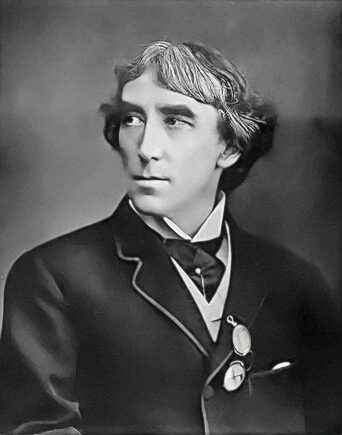
Henry Irving
Henry Irving was an English stage actor of the Victorian era. Born February 6, 1838, in Keinton Mandeville. Died October 13, 1905, in Bradford. Awards include honorary doctorate of Trinity College, Dublin, honorary doctorate from the University of Cambridge and honorary doctorate of the University of Glasgow.
Facts
28 facts · 2 confirmed by two sources · 8 cited · 18 from one source
Where this comes from
Papalocal keeps its own record. It started from these sources; what each one said is kept here as it was copied, so a change on their side never changes this page by itself. Tap one to read its version.
What Wikidata says · copied November 16, 2026 · revision 2568761736
- Described as
- English stage actor of the Victorian era (1838–1905)
- Other names
- Sir Henry Irving, John Henry Brodribb, J. H. Irving
- Born
- February 6, 1838 · 12 references
- Died
- October 13, 1905 · 12 references
- Born in
- Keinton Mandeville
- Died in
- Bradford
- Buried in
- Westminster Abbey
- Cause of death
- stroke
- Name at birth
- John Henry Brodribb
- Citizen of
- United Kingdom of Great Britain and Ireland
- Occupation
- stage actor; theatre director · 1 reference; theatrical producer; actor-manager; theatre manager · 1 reference; actor · 1 reference; director · 1 reference; Theaterintendant · 1 reference
- Worked for
- Lyceum Theatre
- Genre
- Shakespearean comedy
- Awards
- honorary doctorate of Trinity College, Dublin; honorary doctorate from the University of Cambridge; honorary doctorate of the University of Glasgow
- Field
- theatre; performing arts
- Spouse
- Florence O'Callaghan (1869–) · 1 reference
- Children
- Harry Brodribb Irving · 1 reference; Laurence Irving · 1 reference
- Father
- Samuel Brodribb · 1 reference
- Mother
- Mary Behenna · 1 reference
- Wikipedias with a page
- 35
Wikidata item Q32505 (wikidata.org/wiki/Q32505), public domain (CC0). Copied November 16, 2026.
What Wikipedia says · copied November 16, 2026 · revision 1379734432
Sir Henry Irving (né John Henry Brodribb; 6 February 1838 – 13 October 1905) was an English actor-manager in the Victorian and Edwardian eras. He established himself at the West End theatre the Lyceum. His long campaign to have theatre recognised as an art of equal importance with music and painting culminated when he was knighted in 1895, the first actor to be thus honoured.
Irving was born in the West Country of England and grew up in straitened circumstances. He was raised by his mother and her sister, who were intensely religious and disapproved of his passion for the theatre. He secured an engagement with a repertory company in Sunderland in 1856 and learned his craft in a succession of provincial theatres, and occasionally in London, over the next fourteen years. In 1870 he established himself as a West End actor with a leading role in a long-running play at the Vaudeville Theatre. The impresario H. L. Bateman, proprietor of the Lyceum, then recruited him, and Irving soon made a sensational impression in The Bells which propelled him into the front rank of English actors. After Bateman died in 1875, his widow took over the company, which she handed over to Irving in 1878.
With Ellen Terry as his leading lady, over the next twenty-three years Irving made the Lyceum the most important theatre in London. He became particularly associated with the plays of Shakespeare, although most of his productions were of modern works. He engaged leading designers and composers and became known for the lavishness of his productions, which he presented not only at the Lyceum but on tour in Britain and North America. Despite mannerisms in speech and sometimes ungainly movement, he was known as an intense, magnetic actor who could hold an audience spellbound. He appeared in roles that displayed nobility and goodness, and others that were malign and evil.
Overwork and financial difficulties undermined Irving's health and led to his leaving the Lyceum in 1902. In his last years his London base was the Theatre Royal, Drury Lane, and he continued to tour the provinces, dying suddenly after a performance in Bradford in October 1905. His ashes were buried in Westminster Abbey.
- Born, in its opening lines
- February 6, 1838
- Died, in its opening lines
- October 13, 1905
From the Wikipedia article “Henry Irving” (en.wikipedia.org/wiki/Henry_Irving), by its contributors, under CC BY-SA 4.0 (creativecommons.org/licenses/by-sa/4.0/). Copied November 16, 2026; not changed.
Confirmed Two sources agree. Cited One source, and it names where it got it. One source One source, without a reference of its own. Sources disagree The sources disagree. We show the best-supported value and keep theirs below.
