
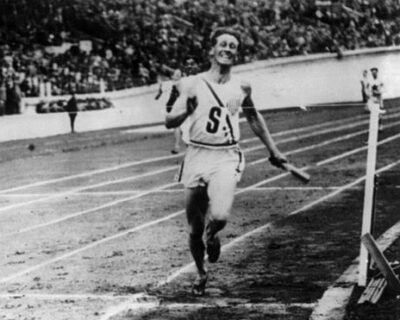
Henry Russell
Henry Russell was an American sprinter. Born December 15, 1904, in Buffalo. Died November 9, 1986, in West Chester. Educated at Cornell University.
Facts
9 facts · 2 confirmed by two sources · 1 cited · 6 from one source
Where this comes from
Papalocal keeps its own record. It started from these sources; what each one said is kept here as it was copied, so a change on their side never changes this page by itself. Tap one to read its version.
What Wikidata says · copied November 16, 2026 · revision 2539899566
- Described as
- American sprinter (1904-1986)
- Other names
- Henry Argue "Hank" Russell, Henry Argue Russell
- Born
- December 15, 1904
- Died
- November 9, 1986 · 1 reference
- Born in
- Buffalo
- Died in
- West Chester
- Citizen of
- United States
- Occupation
- sprinter
- Education
- Cornell University
- Sport
- athletics
- Height
- 1.85 m (6 ft 1 in) · 1 reference
- Wikipedias with a page
- 22
Wikidata item Q1386861 (wikidata.org/wiki/Q1386861), public domain (CC0). Copied November 16, 2026.
What Wikipedia says · copied November 16, 2026 · revision 1367413741
Henry Argue Russell (December 15, 1904 – November 9, 1986) was an American track and field athlete, winner of the gold medal in the 4 × 100 m relay at the 1928 Summer Olympics.
A Cornell University student, Henry Russell won the IC4A championships in 100 yd (91 m) in 1926 and in 220 yd (200 m) in 1925 and 1926. Russell was elected to the Sphinx Head Society during his senior year.
At the Amsterdam Olympics, Russell reached the semifinals in 100 m and ran the anchoring leg in the American 4 × 100 m relay team, which equalled the world record of 41.0 s, in the final.
Henry Russell died at 81 in West Chester, Pennsylvania.
- Born, in its opening lines
- December 15, 1904
- Died, in its opening lines
- November 9, 1986
From the Wikipedia article “Henry Russell (athlete)” (en.wikipedia.org/wiki/Henry_Russell_(athlete)), by its contributors, under CC BY-SA 4.0 (creativecommons.org/licenses/by-sa/4.0/). Copied November 16, 2026; not changed.
Confirmed Two sources agree. Cited One source, and it names where it got it. One source One source, without a reference of its own. Sources disagree The sources disagree. We show the best-supported value and keep theirs below.
