
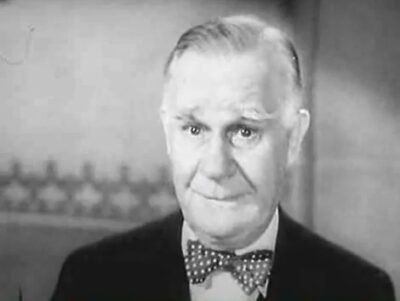
Henry Travers was a British-American actor. Born March 5, 1874, in Berwick-upon-Tweed. Died October 18, 1965, in Hollywood.
Facts
11 facts · 2 confirmed by two sources · 4 cited · 5 from one source
Where this comes from
Papalocal keeps its own record. It started from these sources; what each one said is kept here as it was copied, so a change on their side never changes this page by itself. Tap one to read its version.
What Wikidata says · copied November 16, 2026 · revision 2567697380
- Described as
- British-American actor
- Other names
- Travers John Heagerty
- Born
- March 5, 1874 · 2 references
- Died
- October 18, 1965 · 2 references
- Born in
- Berwick-upon-Tweed · 1 reference
- Died in
- Hollywood · 1 reference
- Buried in
- Forest Lawn Memorial Park
- Cause of death
- arteriosclerosis
- Citizen of
- United Kingdom
- Occupation
- film actor · 1 reference; stage actor; actor · 2 references
- Height
- 1.64 m (5 ft 5 in)
- Wikipedias with a page
- 29
Wikidata item Q960050 (wikidata.org/wiki/Q960050), public domain (CC0). Copied November 16, 2026.
What Wikipedia says · copied November 16, 2026 · revision 1383955479
Travers John Heagerty (5 March 1874 – 18 October 1965), known professionally as Henry Travers, was an English film and stage character actor who specialised in portraying slightly bumbling but amiable and likeable older men. His best known role to today's audiences was the guardian angel Clarence Odbody in the 1946 film It's a Wonderful Life. He also received an Academy Award nomination for his supporting role in Mrs. Miniver (1942). Other notable films include The Invisible Man (1933), Dark Victory (1939), High Sierra (1941), and The Bells of St. Mary's (1945).
- Born, in its opening lines
- March 5, 1874
- Died, in its opening lines
- October 18, 1965
From the Wikipedia article “Henry Travers” (en.wikipedia.org/wiki/Henry_Travers), by its contributors, under CC BY-SA 4.0 (creativecommons.org/licenses/by-sa/4.0/). Copied November 16, 2026; not changed.
Confirmed Two sources agree. Cited One source, and it names where it got it. One source One source, without a reference of its own. Sources disagree The sources disagree. We show the best-supported value and keep theirs below.
