
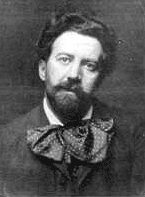
Henry Wood
Henry Wood was an English conductor. Born March 3, 1869, in London. Died August 19, 1944, in Hitchin. Educated at Royal Academy of Music. Awards include Royal Philharmonic Society Gold Medal, Knight Bachelor and Order of the Companions of Honour.
Facts
17 facts · 2 confirmed by two sources · 4 cited · 11 from one source
Where this comes from
Papalocal keeps its own record. It started from these sources; what each one said is kept here as it was copied, so a change on their side never changes this page by itself. Tap one to read its version.
What Wikidata says · copied November 16, 2026 · revision 2567363578
- Described as
- English conductor (1869–1944)
- Other names
- Henry Joseph Wood, Henry J. Wood, Sir Henry Wood
- Born
- March 3, 1869 · 8 references
- Died
- August 19, 1944 · 8 references
- Born in
- London · 1 reference
- Died in
- Hitchin · 2 references
- Buried in
- St Sepulchre-without-Newgate, Holborn
- Citizen of
- United Kingdom; United Kingdom of Great Britain and Ireland (–1927)
- Occupation
- conductor · 1 reference; composer · 1 reference; university teacher
- Worked for
- Royal Academy of Music
- Education
- Royal Academy of Music
- Genre
- classical music · 1 reference
- Instrument
- organ
- Awards
- Royal Philharmonic Society Gold Medal (1921); Knight Bachelor; Order of the Companions of Honour (1944)
- Wikipedias with a page
- 29
Wikidata item Q449299 (wikidata.org/wiki/Q449299), public domain (CC0). Copied November 16, 2026.
What Wikipedia says · copied November 16, 2026 · revision 1353718715
Sir Henry Joseph Wood (3 March 1869 – 19 August 1944) was an English conductor best known for his association with London's annual series of promenade concerts, known as the Proms. He conducted them for nearly half a century, introducing hundreds of new works to British audiences. After his death, the concerts were officially renamed in his honour as the "Henry Wood Promenade Concerts", although they continued to be generally referred to as "the Proms".
Born in modest circumstances to parents who encouraged his musical talent, Wood started his career as an organist. During his studies at the Royal Academy of Music, he came under the influence of the voice teacher Manuel García and became his accompanist. After similar work for Richard D'Oyly Carte's opera companies on the works of Arthur Sullivan and others, Wood became the conductor of a small operatic touring company. He was soon engaged by the larger Carl Rosa Opera Company. One notable event in his operatic career was conducting the British premiere of Tchaikovsky's Eugene Onegin in 1892.
From the mid-1890s until his death, Wood focused on concert conducting. He was engaged by the impresario Robert Newman to conduct a series of promenade concerts at the Queen's Hall, offering a mixture of classical and popular music at low prices. The series was successful, and Wood conducted annual promenade series until his death in 1944. By the 1920s, Wood had steered the repertoire entirely to classical music. When the Queen's Hall was destroyed by bombing in 1941, the Proms moved to the Royal Albert Hall.
Wood declined the chief conductorships of the New York Philharmonic and Boston Symphony Orchestras, believing it his duty to serve music in the United Kingdom. In addition to the Proms, he conducted concerts and festivals throughout the country and also trained the student orchestra at the Royal Academy of Music. He had an enormous influence on the musical life of Britain over his long career: he and Newman greatly improved access to classical music, and Wood raised the standard of orchestral playing and nurtured the taste of the public, presenting a vast repertoire of music spanning four centuries.
- Born, in its opening lines
- March 3, 1869
- Died, in its opening lines
- August 19, 1944
From the Wikipedia article “Henry Wood” (en.wikipedia.org/wiki/Henry_Wood), by its contributors, under CC BY-SA 4.0 (creativecommons.org/licenses/by-sa/4.0/). Copied November 16, 2026; not changed.
Confirmed Two sources agree. Cited One source, and it names where it got it. One source One source, without a reference of its own. Sources disagree The sources disagree. We show the best-supported value and keep theirs below.
