
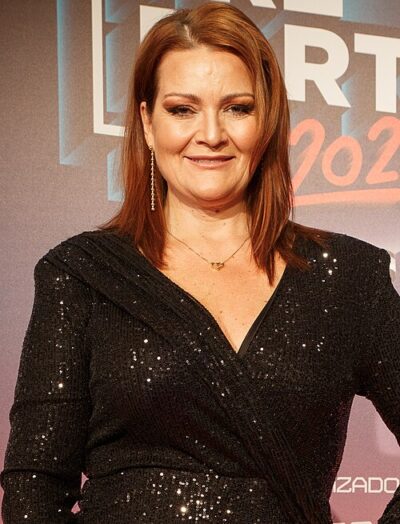
Hera Björk is an Icelandic singer. Born March 29, 1972, in Reykjavík.
Facts
9 facts · 1 confirmed by two sources · 2 cited · 6 from one source
Where this comes from
Papalocal keeps its own record. It started from these sources; what each one said is kept here as it was copied, so a change on their side never changes this page by itself. Tap one to read its version.
What Wikidata says · copied November 16, 2026 · revision 2530388007
- Described as
- Icelandic singer
- Other names
- Hera Björk Þórhallsdóttir, Hera Björk Thorhallsdottir
- Born
- March 29, 1972 · 2 references
- Born in
- Reykjavík
- Name at birth
- Hera Björk Þórhallsdóttir
- Citizen of
- Iceland · 1 reference
- Occupation
- singer · 1 reference
- Genre
- pop music; soul
- Instrument
- voice
- Record label
- Island Records · 1 reference
- Wikipedias with a page
- 43
Wikidata item Q216979 (wikidata.org/wiki/Q216979), public domain (CC0). Copied November 16, 2026.
What Wikipedia says · copied November 16, 2026 · revision 1293048102
Hera Björk Þórhallsdóttir (Icelandic pronunciation: [ˈhɛːra ˈpjœr̥k ˈθouːr̥halsˌtouhtɪr̥]; born 29 March 1972) is an Icelandic singer. She is known for representing Iceland in the Eurovision Song Contest 2010 with the song "Je ne sais quoi", where she finished 19th in the Grand Final, and at the Viña del Mar International Song Festival 2013 with the song "Because You Can", where she won in the Best Song category.
She was selected among the contestants of Söngvakeppnin 2024, the Icelandic national final for the Eurovision Song Contest 2024, with the song "Við förum hærra" / "Scared of Heights". She qualified for the final and won with the English version, with which she represented Iceland in the contest for a second time, failing to qualify from the first semi-final on 7 May 2024, placing 15th out of 15 with 3 points.
- Born, in its opening lines
- March 29, 1972
From the Wikipedia article “Hera Björk” (en.wikipedia.org/wiki/Hera_Björk), by its contributors, under CC BY-SA 4.0 (creativecommons.org/licenses/by-sa/4.0/). Copied November 16, 2026; not changed.
Confirmed Two sources agree. Cited One source, and it names where it got it. One source One source, without a reference of its own. Sources disagree The sources disagree. We show the best-supported value and keep theirs below.
