
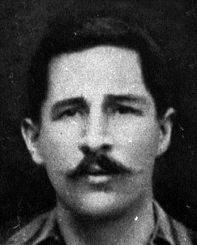
Herbert Kilpin
Herbert Kilpin was an English footballer. Born January 24, 1870, in Nottingham. Died October 22, 1916, in Milan. Teams include Internazionale F.C. Torino (1891–1899), AC Milan (1899–1908) and Inter Milan.
Facts
12 facts · 2 confirmed by two sources · 3 cited · 7 from one source
Where this comes from
Papalocal keeps its own record. It started from these sources; what each one said is kept here as it was copied, so a change on their side never changes this page by itself. Tap one to read its version.
What Wikidata says · copied November 17, 2026 · revision 2536112168
- Described as
- English footballer (1870–1916)
- Born
- January 24, 1870
- Died
- October 22, 1916
- Born in
- Nottingham
- Died in
- Milan
- Buried in
- monumental cemetery of Milan · 2 references
- Citizen of
- United Kingdom of Great Britain and Ireland
- Occupation
- association football player; association football coach · 1 reference
- Teams
- Internazionale F.C. Torino (1891–1899); AC Milan (1899–1908); Inter Milan
- Sport
- association football · 1 reference
- Wikipedias with a page
- 26
Wikidata item Q374252 (wikidata.org/wiki/Q374252), public domain (CC0). Copied November 17, 2026.
What Wikipedia says · copied November 17, 2026 · revision 1383232875
Herbert Kilpin (24 January 1870 – 22 October 1916) was an English football player and manager, best known as the main founding father of AC Milan. After playing as an amateur in his native city of Nottingham, in the early 1890s he moved to Italy to work in the textile industry and he became one of the pioneers of football in the country, first as a player for Internazionale Torino and then as player, manager, and charter member of Milan.
- Born, in its opening lines
- January 24, 1870
- Died, in its opening lines
- October 22, 1916
From the Wikipedia article “Herbert Kilpin” (en.wikipedia.org/wiki/Herbert_Kilpin), by its contributors, under CC BY-SA 4.0 (creativecommons.org/licenses/by-sa/4.0/). Copied November 17, 2026; not changed.
Confirmed Two sources agree. Cited One source, and it names where it got it. One source One source, without a reference of its own. Sources disagree The sources disagree. We show the best-supported value and keep theirs below.
