
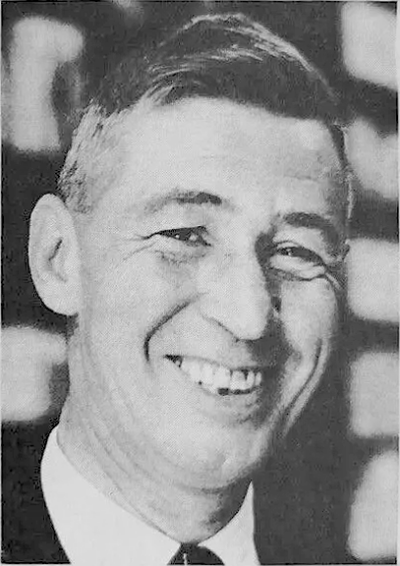
Hergé
Hergé was a Belgian comics writer. Born May 22, 1907, in Etterbeek. Died March 3, 1983, in Saint-Luc University Hospital. Positions held include art director. Known for The Adventures of Tintin, Quick & Flupke and Jo, Zette and Jocko. Educated at Institut Saint-Boniface-Parnasse and Institut Saint-Luc. Awards include Officer of the Order of the Crown, Prix Saint-Michel and Will Eisner Hall of Fame.
Facts
41 facts · 2 confirmed by two sources · 12 cited · 27 from one source
Where this comes from
Papalocal keeps its own record. It started from these sources; what each one said is kept here as it was copied, so a change on their side never changes this page by itself. Tap one to read its version.
What Wikidata says · copied November 16, 2026 · revision 2569004991
- Described as
- Belgian comics writer (1907–1983)
- Other names
- Georges Remi, Georges Prosper Remi, Hergé (ps.), Herge
- Born
- May 22, 1907 · 12 references
- Died
- March 3, 1983 · 14 references
- Born in
- Etterbeek · 2 references
- Died in
- Saint-Luc University Hospital · 1 reference
- Buried in
- Dieweg Cemetery
- Cause of death
- leukemia
- Name at birth
- Georges Prosper Remi
- Citizen of
- Belgium
- Occupation
- cartoonist · 1 reference; writer; comics artist · 4 references; illustrator · 2 references; draftsperson · 2 references; postage stamp designer · 1 reference
- Positions held
- art director
- Worked for
- Le Vingtième Siècle (1925–1940) · 1 reference; Le Lombard (1946–); Le Soir (1940–1944); Tintin (1946–); Casterman (1934–)
- Education
- Institut Saint-Boniface-Parnasse (1920–) · 1 reference; Institut Saint-Luc
- Genre
- ligne claire
- Known for
- The Adventures of Tintin; Quick & Flupke; Jo, Zette and Jocko; Popol out West
- Awards
- Officer of the Order of the Crown (1978); Prix Saint-Michel (1973) · 1 reference; Will Eisner Hall of Fame (2003) · 1 reference; Jack Kirby Hall of Fame (1999) · 1 reference; Adamson Awards (1971) · 1 reference
- Field
- comic; young adult literature · 1 reference
- Spouse
- Germaine Kieckens (1932–1977); Fanny Rodwell (1977–1983)
- Religion
- lapsed Catholic
- Lived in
- Etterbeek (1907–) · 2 references; Watermael-Boitsfort (1939–1953); Céroux-Mousty (1949–1960)
- Website
- http://tintin.com/herge
- Wikipedias with a page
- 65
Wikidata item Q52985 (wikidata.org/wiki/Q52985), public domain (CC0). Copied November 16, 2026.
What Wikipedia says · copied November 16, 2026 · revision 1384274558
Georges Prosper Remi (French: [ʒɔʁʒ pʁɔspɛʁ ʁəmi]; 22 May 1907 – 3 March 1983), known by the pen name Hergé ( air-ZHAY; French: [ɛʁʒe] ), from the French pronunciation of his reversed initials RG, was a Belgian cartoonist. He is best known for creating The Adventures of Tintin, the series of comic albums that are considered one of the most popular European comics of the 20th century. He was also responsible for two other well-known series, Quick & Flupke (1930–1940) and The Adventures of Jo, Zette and Jocko (1936–1957). His works were executed in his distinctive ligne claire drawing style.
Born to a lower-middle-class family in Etterbeek, Brussels, Hergé began his career by contributing illustrations to Scouting magazines, developing his first comic series, The Adventures of Totor, for Le Boy-Scout Belge in 1926. Working for the conservative Catholic newspaper Le Vingtième Siècle, he created The Adventures of Tintin in 1929 on the advice of its editor Norbert Wallez. Revolving around the actions of boy reporter Tintin and his dog Snowy, the series' early instalments – Tintin in the Land of the Soviets, Tintin in the Congo, and Tintin in America – were designed as conservative propaganda for children. Domestically successful, after serialisation the stories were published in book form, with Hergé continuing the series and also developing both the Quick & Flupke and Jo, Zette and Jocko series for Le Vingtième Siècle. Influenced by his friend Zhang Chongren, from 1934 Hergé placed far greater emphasis on conducting background research for his stories, resulting in increased realism from The Blue Lotus onward. Following the German occupation of Belgium in 1940, Le Vingtième Siècle was closed, but Hergé continued his series in Le Soir, a popular newspaper controlled by the Nazi administration.
After the Allied liberation of Belgium in 1944, Le Soir was shut down and its staff – including Hergé – accused of having been collaborators. An official investigation was launched, and although no charges were brought against Hergé, in subsequent years he repeatedly faced accusations of having been a traitor and collaborator. With Raymond Leblanc he established Tintin magazine in 1946, through which he serialised new Adventures of Tintin stories. As the magazine's artistic director, he also oversaw the publication of other successful comics series, such as Edgar P. Jacobs' Blake and Mortimer. In 1950 he established Studios Hergé as a team to aid him in his ongoing projects; prominent staff members Jacques Martin and Bob de Moor greatly contributed to subsequent volumes of The Adventures of Tintin. Amid personal turmoil following the collapse of his first marriage, he produced Tintin in Tibet, his personal favourite of his works. In later years he became less prolific, and unsuccessfully attempted to establish himself as an abstract artist.
Hergé's works have been widely acclaimed for their clarity of draughtsmanship and meticulous, well-researched plots. They have been the source of a wide range of adaptations, in theatre, radio, television, cinema, and computer gaming. He remains a strong influence on the comic book medium, particularly in Europe. He is widely celebrated in Belgium: a Hergé Museum was established in Louvain-la-Neuve in 2009.
- Born, in its opening lines
- May 22, 1907
- Died, in its opening lines
- March 3, 1983
From the Wikipedia article “Hergé” (en.wikipedia.org/wiki/Hergé), by its contributors, under CC BY-SA 4.0 (creativecommons.org/licenses/by-sa/4.0/). Copied November 16, 2026; not changed.
Confirmed Two sources agree. Cited One source, and it names where it got it. One source One source, without a reference of its own. Sources disagree The sources disagree. We show the best-supported value and keep theirs below.
