
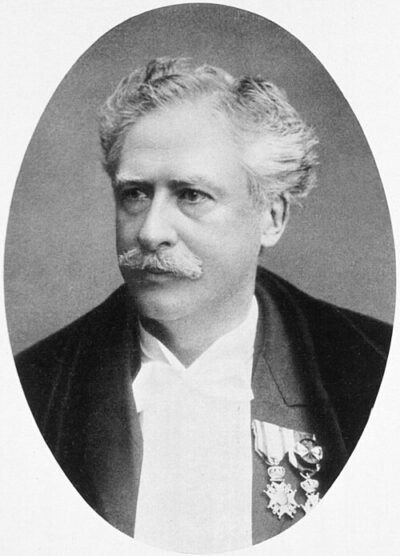
Hermann Snellen
Hermann Snellen was a Dutch ophthalmologist. Born February 19, 1834, in Zeist. Died January 18, 1908, in Utrecht. Positions held include rector of Utrecht University. Educated at Utrecht University.
Facts
12 facts · 2 confirmed by two sources · 7 cited · 3 from one source
Where this comes from
Papalocal keeps its own record. It started from these sources; what each one said is kept here as it was copied, so a change on their side never changes this page by itself. Tap one to read its version.
What Wikidata says · copied November 18, 2026 · revision 2568884644
- Described as
- Dutch ophthalmologist (1834-1908)
- Other names
- Snellen, H. Snellen, Herman Snellen
- Born
- February 19, 1834 · 7 references
- Died
- January 18, 1908 · 6 references
- Born in
- Zeist · 2 references
- Died in
- Utrecht · 1 reference
- Citizen of
- Kingdom of the Netherlands · 1 reference
- Occupation
- physician; ophthalmologist · 1 reference; university teacher · 3 references
- Positions held
- rector of Utrecht University
- Worked for
- Utrecht University (1876–1899) · 2 references
- Education
- Utrecht University
- Children
- Herman Snellen der Jüngere · 1 reference
- Wikipedias with a page
- 21
Wikidata item Q24141 (wikidata.org/wiki/Q24141), public domain (CC0). Copied November 18, 2026.
What Wikipedia says · copied November 18, 2026 · revision 1386378093
Herman Snellen (Dutch pronunciation: [ˈɦɛrmɑn ˈsnɛlə(n)], February 19, 1834 – January 18, 1908) was a Dutch ophthalmologist who in 1862 introduced the Snellen chart to study visual acuity. He took over directorship of the Netherlands Hospital for Eye Patients (Nederlandsch Gasthuis voor Ooglijders), after Franciscus Donders. He was elected an International Member of the American Philosophical Society in 1894.
- Born, in its opening lines
- February 19, 1834
- Died, in its opening lines
- January 18, 1908
From the Wikipedia article “Herman Snellen” (en.wikipedia.org/wiki/Herman_Snellen), by its contributors, under CC BY-SA 4.0 (creativecommons.org/licenses/by-sa/4.0/). Copied November 18, 2026; not changed.
Confirmed Two sources agree. Cited One source, and it names where it got it. One source One source, without a reference of its own. Sources disagree The sources disagree. We show the best-supported value and keep theirs below.
