
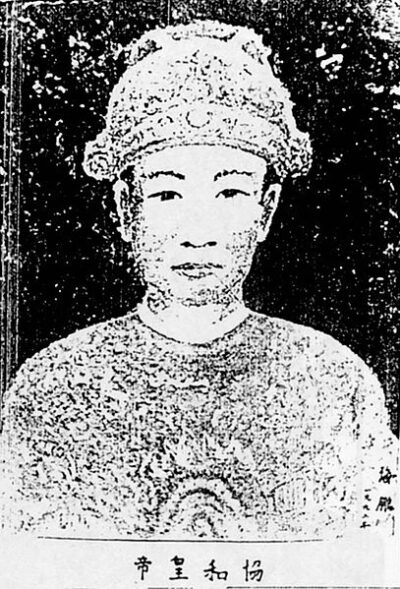
Hiệp Hòa
Hiệp Hòa was a Vietnamese emperor. Born November 1, 1847, in Huế. Died November 29, 1883, in Huế.
Facts
20 facts · 2 confirmed by two sources · 0 cited · 18 from one source
Where this comes from
Papalocal keeps its own record. It started from these sources; what each one said is kept here as it was copied, so a change on their side never changes this page by itself. Tap one to read its version.
What Wikidata says · copied November 17, 2026 · revision 2553938158
- Described as
- Vietnamese emperor (1847–1883)
- Born
- November 1, 1847
- Died
- November 29, 1883
- Born in
- Huế
- Died in
- Huế
- Cause of death
- poison
- Name at birth
- Nguyễn Phúc Hồng Dật
- Citizen of
- Vietnam
- Occupation
- monarch
- Father
- Thiệu Trị
- Mother
- Trương Thị Thận
- Siblings
- Nguyễn Phúc Hồng Y; Nguyễn Phúc Hồng Cai; Nguyễn Phúc Hồng Tố; Nguyễn Phúc Hồng Kiện; Nguyễn Phúc Hồng Truyền; Nguyễn Phúc Hồng Phó; Nguyễn Phúc Hồng Hưu; Nguyễn Phúc Hồng Diêu; Nguyễn Phúc Hồng Phi; Nguyễn Phúc Hồng Bàng
- Wikipedias with a page
- 26
Wikidata item Q465598 (wikidata.org/wiki/Q465598), public domain (CC0). Copied November 17, 2026.
What Wikipedia says · copied November 17, 2026 · revision 1358587036
Hiệp Hòa (Hanoi: [hiəp̚˧˨ʔ hwaː˨˩],
chữ Hán: 協和, lit. "harmonization", 1 November 1847 – 29 November 1883), born Nguyễn Phúc Hồng Dật, and later known as Nguyễn Phúc Thăng upon ascending the throne was the sixth Emperor of the Vietnamese Nguyễn dynasty and reigned for 3 months and 10 days, 130 days in total. During his brief reign, he used the era name Hiệp Hòa, and is commonly referred to by this name. He was not granted a temple name and was posthumously conferred the title Prince of Văn Lãng (文朗郡王), with the Posthumous name Trang Cung (莊恭).
- Born, in its opening lines
- November 1, 1847
- Died, in its opening lines
- November 29, 1883
From the Wikipedia article “Hiệp Hòa” (en.wikipedia.org/wiki/Hiệp_Hòa), by its contributors, under CC BY-SA 4.0 (creativecommons.org/licenses/by-sa/4.0/). Copied November 17, 2026; not changed.
Confirmed Two sources agree. Cited One source, and it names where it got it. One source One source, without a reference of its own. Sources disagree The sources disagree. We show the best-supported value and keep theirs below.
