
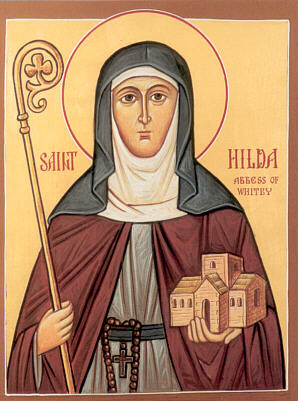
Hilda
Hilda was a Christian saint and the founding abbess of the monastery at Whitby, England. Born 614, in England. Died November 17, 680, in Whitby Abbey. Positions held include abbess.
Facts
11 facts · 2 confirmed by two sources · 1 cited · 8 from one source
Where this comes from
Papalocal keeps its own record. It started from these sources; what each one said is kept here as it was copied, so a change on their side never changes this page by itself. Tap one to read its version.
What Wikidata says · copied November 18, 2026 · revision 2557347796
- Described as
- Christian saint and the founding abbess of the monastery at Whitby, England
- Other names
- Hild of Whitby, Hilda of Whitby, Saint Hilda, Saint Hild, Hild, St. Hilda
- Born
- 614 · 9 references
- Died
- November 17, 680 · 3 references
- Born in
- England
- Died in
- Whitby Abbey
- Citizen of
- Kingdom of Deira
- Occupation
- nun
- Positions held
- abbess
- Father
- Hereric · 1 reference
- Siblings
- Hereswith
- Religion
- Christianity
- Lived in
- Whitby Abbey
- Wikipedias with a page
- 22
Wikidata item Q257500 (wikidata.org/wiki/Q257500), public domain (CC0). Copied November 18, 2026.
What Wikipedia says · copied November 18, 2026 · revision 1386328243
Hilda of Whitby (or Hild; c. 614 – 17 November 680) was a saint of the early Church in Britain. She was the founder and first abbess of the monastery at Whitby which was chosen as the venue for the Synod of Whitby in 664. An important figure in the Christianisation of Anglo-Saxon England, she was abbess in several convents and recognised for the wisdom that drew kings to her for advice.
The source of information about Hilda is the Ecclesiastical History of the English People by Bede in 731, who was born approximately eight years before her death.
- Born, in its opening lines
- c. 614
- Died, in its opening lines
- November 17, 680
From the Wikipedia article “Hilda of Whitby” (en.wikipedia.org/wiki/Hilda_of_Whitby), by its contributors, under CC BY-SA 4.0 (creativecommons.org/licenses/by-sa/4.0/). Copied November 18, 2026; not changed.
Confirmed Two sources agree. Cited One source, and it names where it got it. One source One source, without a reference of its own. Sources disagree The sources disagree. We show the best-supported value and keep theirs below.
