
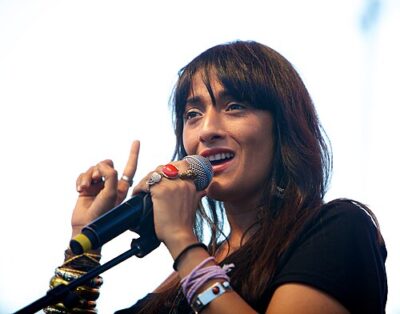
Hindi Zahra is a Moroccan singer and actress. Born January 20, 1979, in Khouribga. Awards include Knight of the Order of National Merit and Victory of the album of traditional musics or musics of the world (2 times).
Facts
11 facts · 1 confirmed by two sources · 4 cited · 6 from one source
Where this comes from
Papalocal keeps its own record. It started from these sources; what each one said is kept here as it was copied, so a change on their side never changes this page by itself. Tap one to read its version.
What Wikidata says · copied November 16, 2026 · revision 2565845014
- Described as
- Moroccan singer and actress
- Born
- January 20, 1979 · 1 reference
- Born in
- Khouribga
- Citizen of
- Morocco · 1 reference
- Occupation
- singer-songwriter; actor; pop singer · 1 reference; musician · 1 reference
- Genre
- pop music
- Awards
- Knight of the Order of National Merit (2016) · 1 reference; Victory of the album of traditional musics or musics of the world (2 times) (2011, 2016)
- Website
- http://www.hindi-zahra.com/
- Wikipedias with a page
- 32
Wikidata item Q463514 (wikidata.org/wiki/Q463514), public domain (CC0). Copied November 16, 2026.
What Wikipedia says · copied November 16, 2026 · revision 1377923068
Hindi Zahra (Tamazight: ⵀⵉⵏⴷⵉ ⵣⴰⵀⵕⴰ, Arabic: هندي زهرة, born 20 January 1979 in Khouribga, Morocco) is a Moroccan singer. When coming up with a stage name, she simply inverted her birth name. Her songs are mostly in English but some lyrics as in the song "Imik Si Mik" are in the Berber Shilha language.
Influenced by singers like Cheikha Rimitti and Umm Kulthum, Hindi Zahra has drawn comparisons with Beth Gibbons of Portishead, Billie Holiday, Patti Smith, and Norah Jones.
- Born, in its opening lines
- January 20, 1979
From the Wikipedia article “Hindi Zahra” (en.wikipedia.org/wiki/Hindi_Zahra), by its contributors, under CC BY-SA 4.0 (creativecommons.org/licenses/by-sa/4.0/). Copied November 16, 2026; not changed.
Confirmed Two sources agree. Cited One source, and it names where it got it. One source One source, without a reference of its own. Sources disagree The sources disagree. We show the best-supported value and keep theirs below.
