
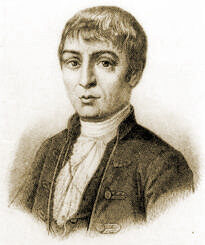
Hipólito Ruiz López
Hipólito Ruiz López was a Spanish botanist. Born August 8, 1754, in Belorado. Died May 4, 1816, in Madrid.
Facts
13 facts · 0 confirmed by two sources · 8 cited · 5 from one source
Where this comes from
Papalocal keeps its own record. It started from these sources; what each one said is kept here as it was copied, so a change on their side never changes this page by itself. Tap one to read its version.
What Wikidata says · copied November 18, 2026 · revision 2564795684
- Described as
- Spanish botanist (1754-1816)
- Other names
- Hipolito Ruiz Lopez, Ruiz Lopez, Hipólito, Hipólito Ruiz, Ruiz, Ruiz López, Ruiz Lopez, Hipolito Ruiz, H. Ruiz López, H. Ruiz Lopez, H. Ruíz L.
- Born
- August 8, 1754 · 2 references
- Died
- May 4, 1816 · 1 reference
- Born in
- Belorado
- Died in
- Madrid
- Citizen of
- Spain
- Occupation
- botanist · 1 reference; botanical collector · 4 references; scientific collector · 1 reference; traveler · 1 reference; discoverer · 1 reference; writer · 1 reference
- Member of
- Botanical Expedition to the Viceroyalty of Peru (1778–1788) · 1 reference
- Field
- botany
- Wikipedias with a page
- 22
Wikidata item Q733976 (wikidata.org/wiki/Q733976), public domain (CC0). Copied November 18, 2026.
What Wikipedia says · copied November 18, 2026 · revision 1341695249
Hipólito Ruiz López (August 8, 1754 in Belorado, Burgos, Spain – 1816 in Madrid), or Hipólito Ruiz, was a Spanish botanist known for researching the floras of Peru and Chile during an expedition under Carlos III from 1777 to 1788. During the reign of Carlos III, three major botanical expeditions were sent to the New World; Ruiz and José Antonio Pavón Jiménez were the botanists for the first of these expeditions, to Peru and Chile.
From the Wikipedia article “Hipólito Ruiz López” (en.wikipedia.org/wiki/Hipólito_Ruiz_López), by its contributors, under CC BY-SA 4.0 (creativecommons.org/licenses/by-sa/4.0/). Copied November 18, 2026; not changed.
Confirmed Two sources agree. Cited One source, and it names where it got it. One source One source, without a reference of its own. Sources disagree The sources disagree. We show the best-supported value and keep theirs below.
