
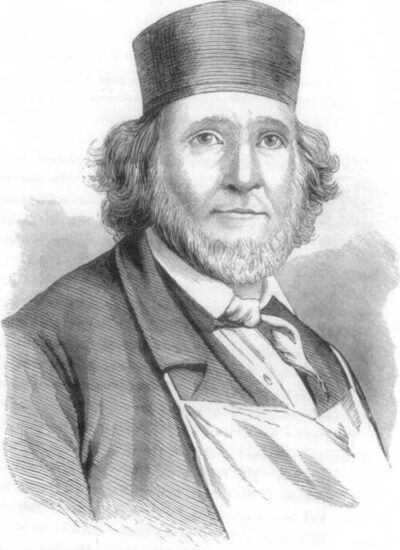
Hiram Powers
Hiram Powers was an American sculptor. Born June 29, 1805, in Woodstock. Died June 27, 1873, in Florence. Awards include Fellow of the American Academy of Arts and Sciences.
Facts
12 facts · 1 confirmed by two sources · 3 cited · 7 from one source · 1 where the sources disagree
What’s different
- Born: we show June 29, 1805 (Sources disagree). Wikipedia says July 29, 1805
Where this comes from
Papalocal keeps its own record. It started from these sources; what each one said is kept here as it was copied, so a change on their side never changes this page by itself. Tap one to read its version.
What Wikidata says · copied November 18, 2026 · revision 2548245587
- Described as
- American sculptor (1805-1873)
- Other names
- Powers, H. Powers
- Born
- June 29, 1805 · 3 references
- Died
- June 27, 1873 · 7 references
- Born in
- Woodstock · 1 reference
- Died in
- Florence · 1 reference
- Buried in
- English Cemetery, Florence
- Citizen of
- United States
- Occupation
- sculptor · 1 reference
- Member of
- American Academy of Arts and Sciences
- Awards
- Fellow of the American Academy of Arts and Sciences
- Spouse
- Elizabeth Gibson Powers
- Children
- Preston Powers; Louisa Greenough Powers Ibbotson
- Wikipedias with a page
- 17
Wikidata item Q2572996 (wikidata.org/wiki/Q2572996), public domain (CC0). Copied November 18, 2026.
What Wikipedia says · copied November 18, 2026 · revision 1383630277
Hiram Powers (July 29, 1805 – June 27, 1873) was an American neoclassical sculptor. He was one of the first 19th-century American artists to gain an international reputation, largely based on his famous marble sculpture The Greek Slave.
- Born, in its opening lines
- July 29, 1805
- Died, in its opening lines
- June 27, 1873
From the Wikipedia article “Hiram Powers” (en.wikipedia.org/wiki/Hiram_Powers), by its contributors, under CC BY-SA 4.0 (creativecommons.org/licenses/by-sa/4.0/). Copied November 18, 2026; not changed.
Confirmed Two sources agree. Cited One source, and it names where it got it. One source One source, without a reference of its own. Sources disagree The sources disagree. We show the best-supported value and keep theirs below.
