
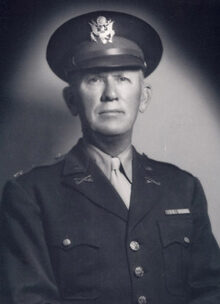
Hiram Tuttle
Hiram Tuttle was an American equestrian. Born December 22, 1882, in Dexter. Died November 11, 1956, in Fort Riley.
Facts
11 facts · 2 confirmed by two sources · 0 cited · 9 from one source
Where this comes from
Papalocal keeps its own record. It started from these sources; what each one said is kept here as it was copied, so a change on their side never changes this page by itself. Tap one to read its version.
What Wikidata says · copied November 18, 2026 · revision 2514681614
- Described as
- American equestrian (1882–1956)
- Other names
- Hiram Edwin Tuttle, Hiram E. Tuttle, H. E. Tuttle
- Born
- December 22, 1882
- Died
- November 11, 1956
- Born in
- Dexter
- Died in
- Fort Riley
- Citizen of
- United States
- Occupation
- dressage rider; lawyer; military officer
- Sport
- equestrian sport
- Military branch
- United States Army
- Military rank
- Colonel
- Wikipedias with a page
- 16
Wikidata item Q3438289 (wikidata.org/wiki/Q3438289), public domain (CC0). Copied November 18, 2026.
What Wikipedia says · copied November 18, 2026 · revision 1367413942
Hiram Edwin Tuttle (December 22, 1882 in Dexter, Maine – November 11, 1956 in Fort Riley, Kansas) was an American equestrian who competed in dressage at the 1932 Summer Olympics and in the 1936 Summer Olympics. He is the only American dressage rider to win an individual medal at an Olympic Games. Tuttle was a lawyer in Boston prior to being a US Army quartermaster officer from 1930 to 1944. He owned and trained his own horses, unusual in a time when the majority of Olympic competitors rode Army-owned horses, and is buried near three of them at the cemetery in Fort Riley.
- Born, in its opening lines
- December 22, 1882
- Died, in its opening lines
- November 11, 1956
From the Wikipedia article “Hiram Tuttle (equestrian)” (en.wikipedia.org/wiki/Hiram_Tuttle_(equestrian)), by its contributors, under CC BY-SA 4.0 (creativecommons.org/licenses/by-sa/4.0/). Copied November 18, 2026; not changed.
Confirmed Two sources agree. Cited One source, and it names where it got it. One source One source, without a reference of its own. Sources disagree The sources disagree. We show the best-supported value and keep theirs below.
