
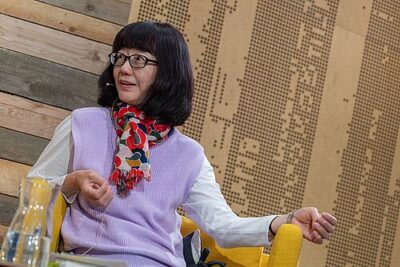
Hiromi Kawakami
Hiromi Kawakami is a Japanese writer. Born April 1, 1958, in Tokyo. Educated at Ochanomizu University. Awards include Akutagawa Prize, Murasaki Shikibu Prize and Bunkamura Les Deux Magots Literature Award.
Facts
18 facts · 1 confirmed by two sources · 9 cited · 8 from one source
Where this comes from
Papalocal keeps its own record. It started from these sources; what each one said is kept here as it was copied, so a change on their side never changes this page by itself. Tap one to read its version.
What Wikidata says · copied November 16, 2026 · revision 2570360968
- Described as
- Japanese writer
- Born
- April 1, 1958 · 2 references
- Born in
- Tokyo · 1 reference
- Citizen of
- Japan · 1 reference
- Occupation
- novelist; writer · 1 reference; science fiction writer; teacher · 1 reference
- Education
- Ochanomizu University
- Awards
- Akutagawa Prize (1996) · 1 reference; Murasaki Shikibu Prize (1999) · 1 reference; Bunkamura Les Deux Magots Literature Award (1999) · 1 reference; Women's Literature Prize (2000); Sei Itō Award (2000); Tanizaki Prize (2001); Yomiuri Prize (2015); Izumi Kyōka Prize for Literature (2016) · 1 reference; Noma Literary Prize (2023); Officer of Arts and Letters (2023) · 2 references
- Wikipedias with a page
- 33
Wikidata item Q286701 (wikidata.org/wiki/Q286701), public domain (CC0). Copied November 16, 2026.
What Wikipedia says · copied November 16, 2026 · revision 1379897022
Hiromi Kawakami (川上 弘美, Kawakami Hiromi; born April 1958) is a Japanese writer, known for her off-beat fiction, poetry, and literary criticism. She has won numerous Japanese literary awards, including the Akutagawa Prize, the Tanizaki Prize, the Yomiuri Prize, and the Izumi Kyōka Prize for Literature. Her work has been adapted for film and has been translated into more than 15 languages.
- Born, in its opening lines
- April 1958
From the Wikipedia article “Hiromi Kawakami” (en.wikipedia.org/wiki/Hiromi_Kawakami), by its contributors, under CC BY-SA 4.0 (creativecommons.org/licenses/by-sa/4.0/). Copied November 16, 2026; not changed.
Confirmed Two sources agree. Cited One source, and it names where it got it. One source One source, without a reference of its own. Sources disagree The sources disagree. We show the best-supported value and keep theirs below.
