
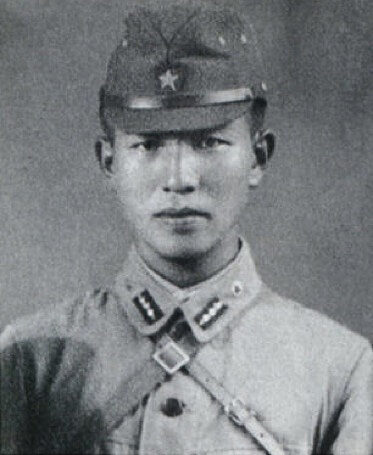
Hiroo Onoda
Hiroo Onoda was an Imperial Japanese Army intelligence officer. Born March 19, 1922, in Kainan. Died January 16, 2014, in Tokyo. Educated at Kainan High School. Awards include Medal with Blue Ribbon.
Facts
18 facts · 2 confirmed by two sources · 2 cited · 14 from one source
Where this comes from
Papalocal keeps its own record. It started from these sources; what each one said is kept here as it was copied, so a change on their side never changes this page by itself. Tap one to read its version.
What Wikidata says · copied November 16, 2026 · revision 2549055338
- Described as
- Imperial Japanese Army intelligence officer (1922-2014)
- Other names
- Onoda Hiroo
- Born
- March 19, 1922 · 2 references
- Died
- January 16, 2014 · 2 references
- Born in
- Kainan
- Died in
- Tokyo
- Cause of death
- heart failure
- Citizen of
- Japan; Empire of Japan (–1947)
- Occupation
- military officer; autobiographer; teacher · 1 reference; soldier · 1 reference
- Education
- Kainan High School
- Awards
- Medal with Blue Ribbon
- Spouse
- Onoda Machie
- Military branch
- Imperial Japanese Army; reconnaissance · 1 reference
- Military rank
- sub-lieutenant
- Website
- https://onoda-shizenjuku.jp
- Wikipedias with a page
- 60
Wikidata item Q295162 (wikidata.org/wiki/Q295162), public domain (CC0). Copied November 16, 2026.
What Wikipedia says · copied November 16, 2026 · revision 1385428406
Hiroo Onoda (Japanese: 小野田 寛郎, Hepburn: Onoda Hiroo; IPA: [o̞no̞da̠ çiɾo̞ː]) (19 March 1922 – 16 January 2014) was a Japanese soldier who served as a second lieutenant in the Imperial Japanese Army during World War II. One of the last Japanese holdouts, Onoda continued fighting for nearly 29 years after the war's end in 1945, carrying out guerrilla warfare on Lubang Island in the Philippines until 1974.
Onoda initially held out with three other soldiers. One surrendered in 1950, and the other two were killed, one in 1954 and one in 1972. The men did not believe flyers and letters from their families stating that the war was over. They survived on wild fruits, game, and stolen rice, and occasionally engaged in shootouts with locals and police, as well as attacking and killing civilians. Onoda was contacted in the jungles of Lubang by Japanese adventurer Norio Suzuki in 1974 but still refused to surrender until he was formally relieved of duty by his former commanding officer, Major Yoshimi Taniguchi, who flew from Japan to the island to issue the order.
Onoda surrendered on 10 March 1974 and received a hero's welcome when he returned to Japan. That year, he wrote and published an autobiography and later moved to Brazil, where he became a cattle rancher. In 1984, Onoda returned to Japan, where he died in 2014 at the age of 91.
- Born, in its opening lines
- March 19, 1922
- Died, in its opening lines
- January 16, 2014
From the Wikipedia article “Hiroo Onoda” (en.wikipedia.org/wiki/Hiroo_Onoda), by its contributors, under CC BY-SA 4.0 (creativecommons.org/licenses/by-sa/4.0/). Copied November 16, 2026; not changed.
Confirmed Two sources agree. Cited One source, and it names where it got it. One source One source, without a reference of its own. Sources disagree The sources disagree. We show the best-supported value and keep theirs below.
